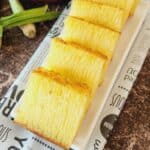
Bika Ambon
Bika Ambon is a unique honeycomb cake from Medan, Indonesia. Here is the simple recipe and tips to bake it successfully!
Servings: 30 slices
Calories: 79kcal
Equipment
- 1 baking pan 6.4x6.4 inch baking pan
Ingredients
Yeast Mixture
- 65 gr flour high protein
- 100 gr water warm
- 5 gr instant yeast
Egg Mixture
- 8 egg yolk
- 175 gr sugar
- 20 gr condensed milk
- ½ tsp salt
- ½ tsp vanilla extract optional
- 130 gr tapioca flour
- 130 gr coconut milk
- 65 gr water
- 105 gr milk
- 15 gr butter melted
- 2 pcs lime leaves
- 2 stalks lemongrass
- 2 pcs pandan leaves
Instructions
- In a saucepan, combine coconut milk, milk, water, kaffir lime leaves, lemongrass, and pandan leaves. Simmer over medium heat until fragrant, then turn off the heat. Strain and let the coconut milk mixture cool completely.
- In a separate bowl, mix cake flour, instant yeast, and water until the yeast dissolves evenly.
- Cover the yeast mixture and let it ferment for 15–20 minutes until slightly bubbly. Meanwhile, in another bowl, whisk eggs, sugar, condensed milk, vanilla, and salt until the mixture turns slightly pale and smooth.
- Once the yeast mixture looks bubbly and foamy, pour it into the egg mixture. Mix on low speed only until combined. Slowly add the cooled coconut milk mixture while mixing continuously. Do not overmix.
- Sift in the tapioca flour and mix until smooth. Cover the bowl tightly with cling wrap and let the batter ferment for 2 hours, until visibly bubbly on the surface. This long fermentation is what creates the signature honeycomb texture.
- Gently whisk the bubbly batter just until the large bubbles subside. Add melted butter and whisk until fully incorporated. Preheat the oven and preheat the baking pan as well. The pan must be hot before pouring in the batter. Always wear oven gloves when handling the pan. Test readiness by flicking a few drops of water onto the pan, if they sizzle immediately, it’s ready. Carefully pour the batter into the hot pan.
- Place the pan on the lower rack and bake at 190°C (bottom heat) for 45–60 minutes, using a water bath or placing a damp cloth underneath to prevent the bottom from burning. Test doneness with a skewer. Once fully baked, move the pan to the upper rack, switch to 180°C (top heat), and bake for 5–10 minutes to lightly brown the surface.
- Keep a close eye on this step, 6–7 minutes is usually enough for a beautiful golden top.
- Let the cake cool completely before slicing. Enjoy your soft, bouncy, honeycomb-filled Bika Ambon!
Video
Notes
- Cool the coconut milk properly – Warm is fine, but hot will kill the yeast. Let the coconut milk mixture cool to lukewarm; this keeps the yeast active and fermentation happy.
- Respect the fermentation – Don’t rush it. Wait until the batter is visibly bubbly before baking—this step is the key to that beautiful honeycomb structure.
- Preheat the pan thoroughly – The baking pan must be very hot before pouring in the batter. This immediate heat helps form clean, well-defined honeycomb holes from top to bottom.
- Use water to protect the bottom – Adding water to the pan outside the batter (water bath method) helps regulate oven heat and prevents the bottom of the cake from burning while the center cooks through.
- Watch the top closely – Once the cake is moved to upper heat, stay nearby. About 6–7 minutes is usually enough to achieve a golden crust without drying the cake.
- Let it cool completely – The texture continues to set as it cools. Cutting too early will collapse the crumb and ruin that signature bouncy texture.
Nutrition
Serving: 1slice | Calories: 79kcal | Carbohydrates: 12g | Protein: 1g | Fat: 3g | Saturated Fat: 2g | Polyunsaturated Fat: 0.2g | Monounsaturated Fat: 1g | Trans Fat: 0.02g | Cholesterol: 54mg | Sodium: 48mg | Potassium: 35mg | Fiber: 0.1g | Sugar: 6g | Vitamin A: 89IU | Vitamin C: 0.1mg | Calcium: 15mg | Iron: 1mg