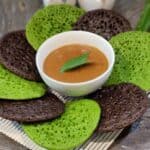
Pandan Serabi
Serabi Pandan is an Indonesian pancake that’s as comforting as it is beautiful. Served warm and drizzled with a sweet coconut sugar sauce, serabi is a beloved street-food snack. One bite and you’ll understand why it’s been loved for generations.
Servings: 20 pieces
Calories: 113kcal
Ingredients
- 150 gr cake flour
- 50 gr rice flour
- 30 gr sugar
- ½ tsp instant yeast
- 1 tsp baking powder
- 1 tsp salt
- 1 egg
- 200 ml coconut milk 130 ml thick coconut milk + 70 ml water
- 50 ml pandan extract
Sauce
- 350 ml coconut milk 200 ml thick coconut milk + 150 ml water
- 80 gr brown sugar
- ½ tsp salt
- 2 pcs pandan leaves
- 1 tbsp cornstarch + a little water
Instructions
- Sift rice flour, tapioca flour, sugar, baking powder, and salt into a large mixing bowl. Stir well with a whisk to combine. Crack in the egg and whisk gently while slowly pouring in the coconut milk. Add the instant yeast and stir until smooth.
- Divide the batter into two bowls. Add pandan extract to one and whisk until evenly mixed. In the other bowl, add cocoa powder and whisk until the batter becomes smooth and glossy. Cover both bowls with cling wrap and let the batter rest for about 30 minutes to ferment.
- After half an hour, you’ll notice tiny bubbles on the surface, a good sign that the yeast is working. Heat a nonstick frying pan over medium heat; there’s no need to grease it. Pour one ladle of batter into the pan and cook until small pores appear on the surface. Once the bottom turns golden brown, remove the serabi from the pan and let it cool. Repeat until all the batter is used.
- To make the sauce, pour coconut milk into a saucepan and add coconut sugar, salt, and pandan leaves. Stir well over medium heat. Mix one tablespoon of cornstarch with a little water, then add it to the sauce to thicken. Stir until it reaches a smooth, slightly thick consistency, then remove from heat. Serve the serabi warm with generous drizzles of coconut milk sauce. Enjoy!
Video
Notes
- Let the batter rest – Don’t skip the resting time! It allows the yeast to activate and form those tiny bubbles that make your serabi soft, fluffy, and full of little pores on top.
- Medium heat is key – Too hot, and the bottom burns before the surface sets; too low, and it won’t bubble nicely. Medium heat gives you that lovely golden-brown base and light, spongy texture.
- Use a nonstick pan – Traditional serabi is made in clay molds, but a small nonstick frying pan works beautifully at home. No oil is needed, just a clean, hot pan for that slightly crisp edge.
- Consistency matters – The batter should be slightly thick but still pourable, similar to pancake batter. If it’s too runny, the serabi will turn flat and dense.
- For extra aroma – Add a small piece of pandan leaf to the pan while cooking, or brush a bit of pandan-infused coconut milk on top for that extra tropical fragrance.
- Serve warm – Serabi tastes best fresh off the pan when it’s warm and soft. Drizzle the thick coconut sugar sauce right before serving so it soaks in beautifully.
Nutrition
Serving: 1piece | Calories: 113kcal | Carbohydrates: 14g | Protein: 2g | Fat: 6g | Saturated Fat: 5g | Polyunsaturated Fat: 0.2g | Monounsaturated Fat: 0.4g | Trans Fat: 0.001g | Cholesterol: 8mg | Sodium: 204mg | Potassium: 79mg | Fiber: 0.3g | Sugar: 5g | Vitamin A: 12IU | Vitamin C: 0.3mg | Calcium: 23mg | Iron: 1mg