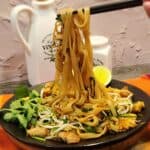
Chicken Pad Thai
This Chicken Pad Thai is made with chewy rice noodles, tender chicken, egg, crunchy bean sprouts, and a savory-sweet Pad Thai sauce. It's an easy Thai noodle dish you can make under 20 minutes.
Servings: 2 portions
Calories: 910kcal
Equipment
- 1 wok
Ingredients
- 150 gr rice noodles
- 150 gr chicken thigh fillet
- 2 cloves garlic
- 2 shallots
- 3 tbsp cooking oil
- 2 eggs
- 1 cup bean sprouts
- ¼ cup chives
- ¼ cup roasted peanuts coarsely chopped
- 1 lime
Pad Thai Sauce
- 2 tbsp brown sugar
- 1 tbsp soy sauce
- 2 tbsp fish sauce
- 1 tbsp rice vinegar
- 1 tsp tamarind paste
- ½ tsp chili flakes optional
Instructions
- Bring a pot of water to a boil and add the rice noodles (Image 1). Cook until the noodles are just pliable, or follow the package instructions (Image 2). Drain well and set aside (Image 3).
- In a small bowl, combine the fish sauce, soy sauce, tamarind paste, rice vinegar, brown sugar, and chili flakes (Image 4). Stir until the brown sugar and tamarind paste are dissolved. If your tamarind paste contains seeds or fibrous pieces, strain the sauce before using.
- Heat oil in a wok over high heat. When the oil is hot, add the chopped garlic and shallots (Image 5). Stir-fry until fragrant and the garlic starts to turn golden.
- Add the sliced chicken thigh (Image 6) and stir-fry until the chicken is cooked through and no longer pink. Push the chicken slightly to one side and add the eggs (Image 7). Let them sit briefly before stirring so you get larger pieces of scrambled egg. Add the cooked rice noodles (Image 8).
- Pour the Pad Thai sauce over the noodles (Image 9). Toss and stir-fry until the noodles, chicken, and eggs are evenly coated with the sauce and heated through.
- Add the chives first and stir them through the noodles. Then add the bean sprouts (Image 10) and cilantro (Image 11). Turn off the heat and toss everything together using the residual heat so the bean sprouts stay slightly crisp and the cilantro remains fresh (Image 12).
- Serve the Chicken Pad Thai immediately while warm, with roasted peanuts, lime wedges, and extra chili flakes if desired.
Notes
- Do not overcook the rice noodles. Cook them only until just pliable. They will continue cooking when stir-fried with the sauce, so overly soft noodles can easily turn mushy.
- Prepare the sauce before you start stir-frying. Pad Thai cooks quickly, so having the sauce mixed and ready makes the cooking process much smoother.
- Dissolve and strain the tamarind paste if needed. Some tamarind pastes contain seeds or fibrous pieces. Mixing it thoroughly and straining the sauce gives you a smoother Pad Thai sauce.
- Use high heat for stir-frying. Make sure the wok and oil are properly hot before adding the garlic and shallots. This helps develop that characteristic stir-fried flavor.
- Let the eggs sit briefly before stirring. After adding the eggs, leave them undisturbed for a short time before scrambling. This creates larger, more noticeable pieces of egg instead of tiny bits throughout the noodles.
- Toss the noodles thoroughly with the sauce. Make sure the sauce coats the noodles evenly so you do not end up with some bland noodles and others that are overly seasoned.
- Add the fresh ingredients near the end. Stir in the chives first, then add the bean sprouts and cilantro toward the end of cooking. Turn off the heat and use the residual heat to finish them so the bean sprouts remain slightly crisp and the herbs stay fresh.
- Taste and adjust before serving. Pad Thai should have a balance of sour, savory, and sweet flavors. Add a little more lime, sugar, fish sauce, or chili according to your preference.
- Serve immediately. Pad Thai is at its best straight from the wok while the noodles are still glossy and tender and the bean sprouts retain their crunch.
Nutrition
Serving: 1portion | Calories: 910kcal | Carbohydrates: 94g | Protein: 30g | Fat: 47g | Saturated Fat: 8g | Polyunsaturated Fat: 13g | Monounsaturated Fat: 24g | Trans Fat: 0.2g | Cholesterol: 237mg | Sodium: 2272mg | Potassium: 719mg | Fiber: 6g | Sugar: 19g | Vitamin A: 694IU | Vitamin C: 23mg | Calcium: 124mg | Iron: 4mg