

Easy Chicken Pad Thai Recipe
 This post may contain affiliate links.
This Chicken Pad Thai is made with chewy rice noodles, tender chicken, egg, crunchy bean sprouts, and a savory-sweet Pad Thai sauce. It’s an easy Thai noodle dish you can make at home.

A Quick Look at the Recipe
🏷️ Recipe Name: Chicken Pad Thai
⏱️ Ready In: ~ 15 minutes
🍽️ Serves: 2 portions
🔥 Calories: 99 kcal per serving (estimate)
🧾 Main Ingredients: Chicken thigh fillet, rice noodles, bean sprouts, chives, garlic, shallots, eggs, roasted peanuts, lime, brown sugar, soy sauce, fish sauce, rice vinegar, tamarind paste, chili flakes.
🥗 Dietary Info: Contains gluten and egg.
🧠 Difficulty: Very easy
Have a question? Ask AI!
Chicken Pad Thai is one of my favorite stir-fried noodle dishes because it has a little bit of everything; chewy rice noodles, tender chicken, egg, crunchy bean sprouts, and a savory-sweet sauce with a hint of tanginess.
If you enjoy easy noodle dishes like my Stir Fried Glass Noodles, Beef Chow Mein, or Shrimp Chow Mei Fun, this Chicken Pad Thai is another delicious recipe to add to your rotation. And if you love Thai flavors, you may also want to try my Pad Kra Pao, a quick and flavorful Thai stir fry that is perfect for a busy weeknight.
This Chicken Pad Thai comes together quickly in one pan and makes a satisfying lunch or dinner that is easy enough to prepare at home.
Why You Will Love This Recipe
Recipe Ingredients
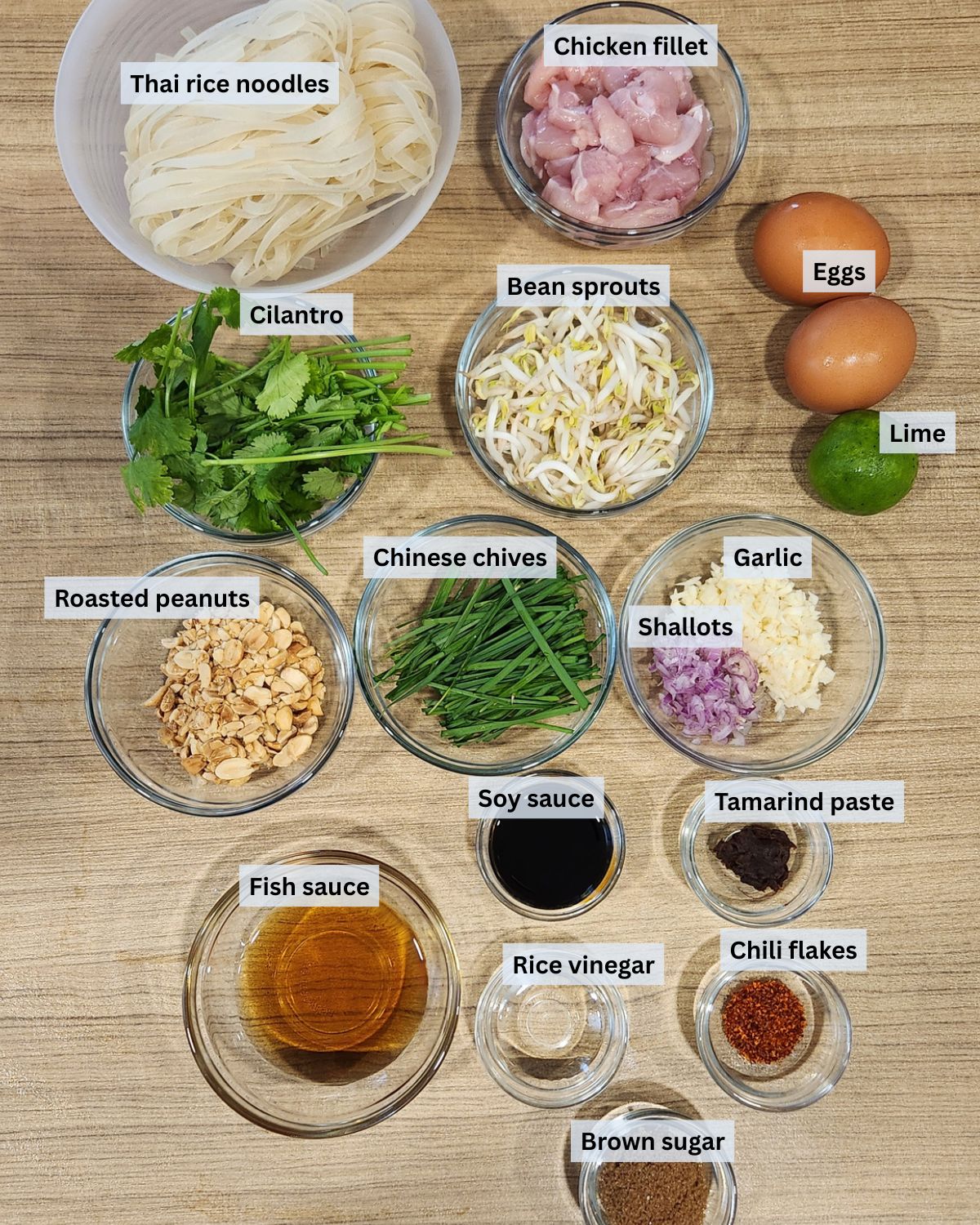
Ingredient Notes
- Rice noodles – Use Thai-style flat dried rice noodles, which you can usually find in Asian grocery stores. Any brand you like will work; just choose noodles intended for Pad Thai or stir-frying.
- Chicken fillet – Chicken thigh or breast both work well. I prefer thigh because it stays tender and juicy during stir-frying.
- Tamarind paste – This gives Pad Thai its characteristic tangy, slightly fruity flavor. Different brands can vary in strength, so you may need to adjust the amount slightly to taste.
- Fish sauce – Adds the salty, savory umami flavor that is important to the Pad Thai sauce.
- Brown sugar – Balances the sourness of the tamarind and the saltiness of the fish sauce. Add a little more if you prefer your Pad Thai sweeter.
- Chili flakes – Optional, but recommended if you enjoy a little heat. Adjust according to your preferred spice level.
- Bean sprouts and chives – Add freshness and a little crunch to the finished noodles. If you can find them,
- Roasted peanuts – Sprinkle them over the finished dish for extra crunch and a nutty flavor.
- Lime – Serve alongside the Pad Thai so everyone can squeeze over as much fresh lime juice as they like.
How to Make Chicken Pad Thai

STEP 1. Cook the rice noodles and prepare the sauce. Bring a pot of water to a boil and add the rice noodles (Image 1). Cook until the noodles are just pliable, or follow the package instructions (Image 2). Drain well and set aside (Image 3).
In a small bowl, combine the fish sauce, soy sauce, tamarind paste, rice vinegar, brown sugar, and chili flakes (Image 4). Stir until the brown sugar and tamarind paste are dissolved. If your tamarind paste contains seeds or fibrous pieces, strain the sauce before using.

STEP 2. Stir-fry the aromatics, chicken, and eggs. Heat oil in a wok over high heat. When the oil is hot, add the chopped garlic and shallots (Image 5). Stir-fry until fragrant and the garlic starts to turn golden.
Add the sliced chicken thigh (Image 6) and stir-fry until the chicken is cooked through and no longer pink. Push the chicken slightly to one side and add the eggs (Image 7). Let them sit briefly before stirring so you get larger pieces of scrambled egg. Add the cooked rice noodles (Image 8).

STEP 3. Add the Pad Thai sauce and finish the noodles. Pour the Pad Thai sauce over the noodles (Image 9). Toss and stir-fry until the noodles, chicken, and eggs are evenly coated with the sauce and heated through.
Add the chives first and stir them through the noodles. Then add the bean sprouts (Image 10) and cilantro (Image 11). Turn off the heat and toss everything together using the residual heat so the bean sprouts stay slightly crisp and the cilantro remains fresh (Image 12).
Serve the Chicken Pad Thai immediately while warm, with roasted peanuts, lime wedges, and extra chili flakes if desired.
Pro Tips
- Do not overcook the rice noodles. Cook them only until just pliable. They will continue cooking when stir-fried with the sauce, so overly soft noodles can easily turn mushy.
- Prepare the sauce before you start stir-frying. Pad Thai cooks quickly, so having the sauce mixed and ready makes the cooking process much smoother.
- Dissolve and strain the tamarind paste if needed. Some tamarind pastes contain seeds or fibrous pieces. Mixing it thoroughly and straining the sauce gives you a smoother Pad Thai sauce.
- Use high heat for stir-frying. Make sure the wok and oil are properly hot before adding the garlic and shallots. This helps develop that characteristic stir-fried flavor.
- Let the eggs sit briefly before stirring. After adding the eggs, leave them undisturbed for a short time before scrambling. This creates larger, more noticeable pieces of egg instead of tiny bits throughout the noodles.
- Toss the noodles thoroughly with the sauce. Make sure the sauce coats the noodles evenly so you do not end up with some bland noodles and others that are overly seasoned.
- Add the fresh ingredients near the end. Stir in the chives first, then add the bean sprouts and cilantro toward the end of cooking. Turn off the heat and use the residual heat to finish them so the bean sprouts remain slightly crisp and the herbs stay fresh.
- Taste and adjust before serving. Pad Thai should have a balance of sour, savory, and sweet flavors. Add a little more lime, sugar, fish sauce, or chili according to your preference.
- Serve immediately. Pad Thai is at its best straight from the wok while the noodles are still glossy and tender and the bean sprouts retain their crunch.
Serving Suggestions
Chicken Pad Thai is already a satisfying one-dish meal, but it is also delicious as part of a larger Asian-inspired spread.
For appetizers, serve it with something crispy such as Fried Shrimp Balls or Fried Wontons. If you want to add a soup or another protein dish, Egg Drop Soup and Shrimp Omelette both pair nicely without competing with the flavors of the Pad Thai.
To add more vegetables to the meal, try Green Beans Garlic Stir Fry, Bok Choy Stir Fry, or Green Beans and Eggs. Their simple savory flavors work well alongside the sweet, sour, and savory Pad Thai sauce.
For dessert, keep the Thai theme going with Bua Loy or Mango Sticky Rice. Finish the meal with a refreshing drink such as Butterfly Pea Flower Tea, Thai Iced Tea, watermelon juice, or Lychee Tea.
Chicken Pad Thai FAQs
Use dried flat rice noodles, preferably Thai-style noodles labeled Pad Thai noodles or rice sticks. They hold up better during stir-frying than fresh or wet rice noodles, which are usually softer and can break more easily.
The noodles were most likely cooked too long before stir-frying. Cook them only until pliable or just tender because they will continue to soften when you toss them with the Pad Thai sauce in the wok.
Yes. Chicken breast works well, although chicken thigh tends to stay more tender and juicy during stir-frying. Slice the chicken thinly so it cooks quickly and evenly.
Tamarind paste gives Pad Thai its characteristic sour and slightly fruity flavor, so I recommend using it if possible. It also helps create the balance of sour, savory, and sweet flavors that makes Pad Thai distinctive.
You can prepare the ingredients and mix the sauce ahead of time, but I recommend stir-frying the Pad Thai shortly before serving. The noodles taste best fresh from the wok and can become softer as they sit.
Pad Thai can become dry if the noodles absorb too much sauce or are cooked for too long. If needed, add a small splash of water while stir-frying to loosen the noodles and help distribute the sauce.

Storage
Store any leftover Chicken Pad Thai in an airtight container in the refrigerator for up to 3 days.
To reheat, warm it in a pan over medium heat until heated through, or reheat it in the microwave. If the noodles seem a little dry, add a small splash of water before reheating to help loosen them.
For the best texture, I’d reheat only the portion you plan to eat, since repeated reheating can make the rice noodles softer.
More Stir Fry Dishes
- Chicken Mushroom Stir Fry
- Pork Broccoli Stir Fry
- Green Beans and Ground Beef
- Szechuan Pork with Tofu
- Chinese Chives and Eggs
Looking for more quick meals? Browse my Easy Stir Fry Recipes for more noodle, meat, seafood, and vegetable stir-fries.

Chicken Pad Thai
Equipment
- 1 wok
Ingredients
- 150 gr rice noodles
- 150 gr chicken thigh fillet
- 2 cloves garlic
- 2 shallots
- 3 tbsp cooking oil
- 2 eggs
- 1 cup bean sprouts
- ¼ cup chives
- ¼ cup roasted peanuts coarsely chopped
- 1 lime
Pad Thai Sauce
- 2 tbsp brown sugar
- 1 tbsp soy sauce
- 2 tbsp fish sauce
- 1 tbsp rice vinegar
- 1 tsp tamarind paste
- ½ tsp chili flakes optional
Instructions
- Bring a pot of water to a boil and add the rice noodles (Image 1). Cook until the noodles are just pliable, or follow the package instructions (Image 2). Drain well and set aside (Image 3).
- In a small bowl, combine the fish sauce, soy sauce, tamarind paste, rice vinegar, brown sugar, and chili flakes (Image 4). Stir until the brown sugar and tamarind paste are dissolved. If your tamarind paste contains seeds or fibrous pieces, strain the sauce before using.
- Heat oil in a wok over high heat. When the oil is hot, add the chopped garlic and shallots (Image 5). Stir-fry until fragrant and the garlic starts to turn golden.
- Add the sliced chicken thigh (Image 6) and stir-fry until the chicken is cooked through and no longer pink. Push the chicken slightly to one side and add the eggs (Image 7). Let them sit briefly before stirring so you get larger pieces of scrambled egg. Add the cooked rice noodles (Image 8).
- Pour the Pad Thai sauce over the noodles (Image 9). Toss and stir-fry until the noodles, chicken, and eggs are evenly coated with the sauce and heated through.
- Add the chives first and stir them through the noodles. Then add the bean sprouts (Image 10) and cilantro (Image 11). Turn off the heat and toss everything together using the residual heat so the bean sprouts stay slightly crisp and the cilantro remains fresh (Image 12).
- Serve the Chicken Pad Thai immediately while warm, with roasted peanuts, lime wedges, and extra chili flakes if desired.
Notes
- Do not overcook the rice noodles. Cook them only until just pliable. They will continue cooking when stir-fried with the sauce, so overly soft noodles can easily turn mushy.
- Prepare the sauce before you start stir-frying. Pad Thai cooks quickly, so having the sauce mixed and ready makes the cooking process much smoother.
- Dissolve and strain the tamarind paste if needed. Some tamarind pastes contain seeds or fibrous pieces. Mixing it thoroughly and straining the sauce gives you a smoother Pad Thai sauce.
- Use high heat for stir-frying. Make sure the wok and oil are properly hot before adding the garlic and shallots. This helps develop that characteristic stir-fried flavor.
- Let the eggs sit briefly before stirring. After adding the eggs, leave them undisturbed for a short time before scrambling. This creates larger, more noticeable pieces of egg instead of tiny bits throughout the noodles.
- Toss the noodles thoroughly with the sauce. Make sure the sauce coats the noodles evenly so you do not end up with some bland noodles and others that are overly seasoned.
- Add the fresh ingredients near the end. Stir in the chives first, then add the bean sprouts and cilantro toward the end of cooking. Turn off the heat and use the residual heat to finish them so the bean sprouts remain slightly crisp and the herbs stay fresh.
- Taste and adjust before serving. Pad Thai should have a balance of sour, savory, and sweet flavors. Add a little more lime, sugar, fish sauce, or chili according to your preference.
- Serve immediately. Pad Thai is at its best straight from the wok while the noodles are still glossy and tender and the bean sprouts retain their crunch.


I love how this Chicken Pad Thai has everything in one dish—chewy noodles, tender chicken, egg, fresh bean sprouts, and that sweet, sour, and savory sauce. It’s one of those meals I’m always happy to eat again!