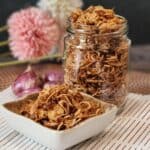
Crispy Fried Shallots or Bawang Goreng
There’s something about crispy fried shallots, known as bawang goreng, that instantly brings back the smell of busy kitchens and comforting home-cooked meals. These thin, golden flakes add crunch, aroma, and that signature Indonesian flavor to so many dishes. If you’ve ever wondered how to make your own batch that stays crispy for weeks, you’re in the right place.
Servings: 50 spoons
Calories: 7kcal
Equipment
- 1 slicer
Ingredients
- 500 gr shallots
- 1 tbsp vinegar
- ½ tbsp salt optional
Instructions
- Soak the unpeeled shallots in hot water for 3–5 minutes. This softens the skin, makes peeling much easier, and helps reduce the tears when slicing. Drain the water, rinse immediately with cold water, then peel the shallots. Give them one more rinse with clean water. Slice the shallots thinly and evenly. If you’re making a big batch, using a shallot slicer or mandoline will help keep the slices uniform.
- Place the sliced shallots into a bowl of clean water. Add a splash of vinegar, stir briefly, then drain well. Transfer the slices to a colander and sprinkle with a little salt. The salt is optional, if you prefer unsalted bawang goreng, you can skip this step. Toss gently with your hands so the seasoning distributes evenly.
- Heat oil in a wok or pot to about 350°F (175°C), then add the shallots. If you're frying a large amount, work in batches to prevent overcrowding. Stir continuously so the shallots cook evenly and maintain a uniform color. When they turn a light golden brown, remove them immediately. Spread the fried shallots on paper towels to drain and cool completely until crisp. Once fully cooled, transfer them to an airtight jar to keep them dry and crunchy for weeks.
- After removing the shallots, strain the oil to catch any browned bits. Pour the clear aromatic “shallot oil” into a clean jar. It’s incredibly flavorful and perfect for stir-fries, fried rice, noodles, or drizzling over soups.
Notes
- Slice evenly for even crispiness - The thinner and more uniform the slices, the more consistent the color and texture will be. If your slices vary in thickness, some will burn before others are even golden.
- Control the heat (medium to low) - High heat will brown the edges too quickly while the inside stays raw. Gentle frying keeps the shallots crisp and prevents bitterness.
- Remove them before they look done - Fried shallots continue browning off-heat. Take them out when they’re still a light golden yellow to avoid over-frying.
- Spread out to cool completely - Crispiness only develops once they cool. A thin, even layer on paper towels gives you the crunchiest results.
- Don’t crowd the pan - Too many shallots at once will drop the oil temperature and make them soggy. Small batches = maximum crunch.
- Strain the oil immediately - Tiny browned bits left in the oil can burn quickly and affect the flavor. A clean, strained shallot oil stays aromatic longer.
- Store only when completely cool - Warm shallots create condensation in the jar, which leads to sogginess. Full cooling = long-lasting crispiness.
- Choose the right oil for better flavor - Coconut oil gives a lighter, cleaner result, while some store-bought versions use palm oil that tastes heavier. Using good oil makes a big difference in aroma and freshness.
- Make a big batch, it keeps well - Once you master the technique, doubling the batch is worth it. You’ll always have crispy toppings and a jar of fragrant shallot oil ready for quick meals.
Nutrition
Serving: 1spoon | Calories: 7kcal | Carbohydrates: 2g | Protein: 0.3g | Fat: 0.01g | Saturated Fat: 0.002g | Polyunsaturated Fat: 0.004g | Monounsaturated Fat: 0.001g | Sodium: 71mg | Potassium: 33mg | Fiber: 0.3g | Sugar: 1g | Vitamin A: 0.4IU | Vitamin C: 1mg | Calcium: 4mg | Iron: 0.1mg