

Chicken and Shrimp Gyoza (Japanese Potstickers)
 This post may contain affiliate links.
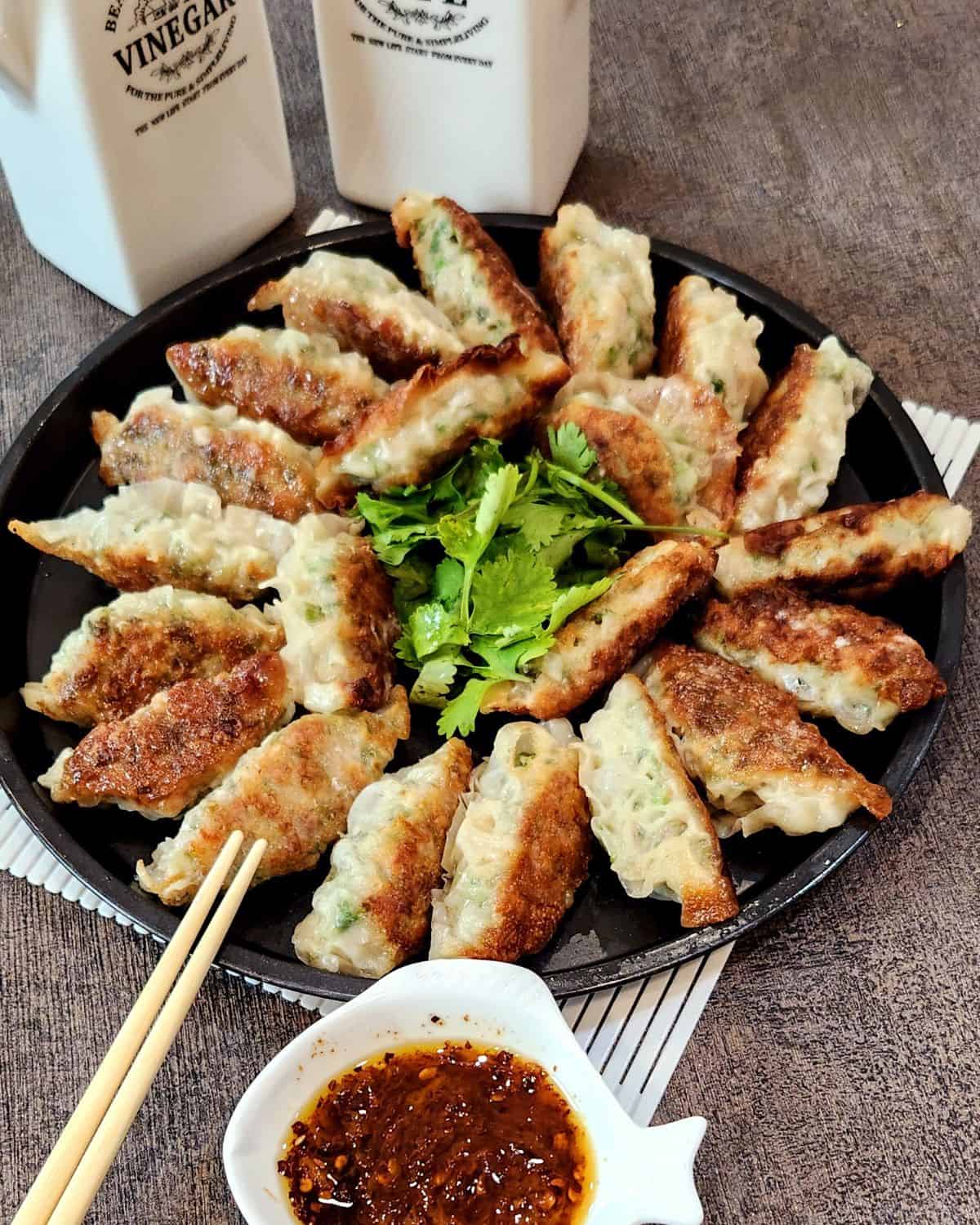
Craving crispy chicken gyoza with that signature golden bottom and juicy filling? This easy homemade recipe shows you exactly how to make Japanese-style dumplings filled with chicken and shrimp, pan-fried to perfection.
A Quick Look at the Recipe
🏷️ Recipe Name: Chicken Gyoza (Japanese Potstickers with Shrimp)
⏱️ Ready In: ~ 25 minutes
🍽️ Serves: 40 pieces
🔥 Calories: 43 kcal per piece (estimate)
🧾 Main Ingredients: Chicken thigh, shrimp, napa cabbage, cilantro, leeks, egg white, tapioca flour, oyster sauce, sesame oil, fish sauce, salt, pepper, wonton wrappers.
🥗 Dietary Info: Halal
🧠 Difficulty: Medium with very simple steps.
Have a question? Ask AI!
Crispy on the bottom and juicy inside, chicken gyoza are one of Asia’s most loved dumplings. These golden crescents are filled with a savory mixture of chicken, shrimp, cabbage, and aromatics, then pan-fried until perfectly crisp on one side and tender on the other. They’re a standout favorite in my collection of Asian chicken recipes.
You’ll find similar dumplings across Asia, called guo tie (鍋貼) in China and mandu (만두) in Korea, but Japanese gyoza are known for their thinner wrappers and finely chopped filling that cooks up light, delicate, and beautifully crispy. That balance of texture is what makes chicken gyoza so irresistible.
If you enjoy making chicken gyoza, you’ll also love other dumpling favorites like Shaomai or Fried and Boiled Wontons. For a complete appetizer spread, don’t miss crispy Deep-Fried Meatballs or golden Shrimp Balls, they pair beautifully with homemade dipping sauces.
What’s the Difference Between Potstickers and Gyoza?
While both are pan-fried dumplings, there are a few key differences between Chinese potstickers (guo tie) and Japanese gyoza.
Chinese potstickers typically use slightly thicker, freshly made wrappers and a chunkier filling. They’re often larger in size, with a heartier texture.
Japanese gyoza, on the other hand, are smaller and made with thinner wrappers that crisp up beautifully when pan-fried. The filling is more finely minced, usually packed with cabbage and meat — giving chicken gyoza a smoother, juicier texture.
Why You Will Love This Recipe
Recipe Ingredients
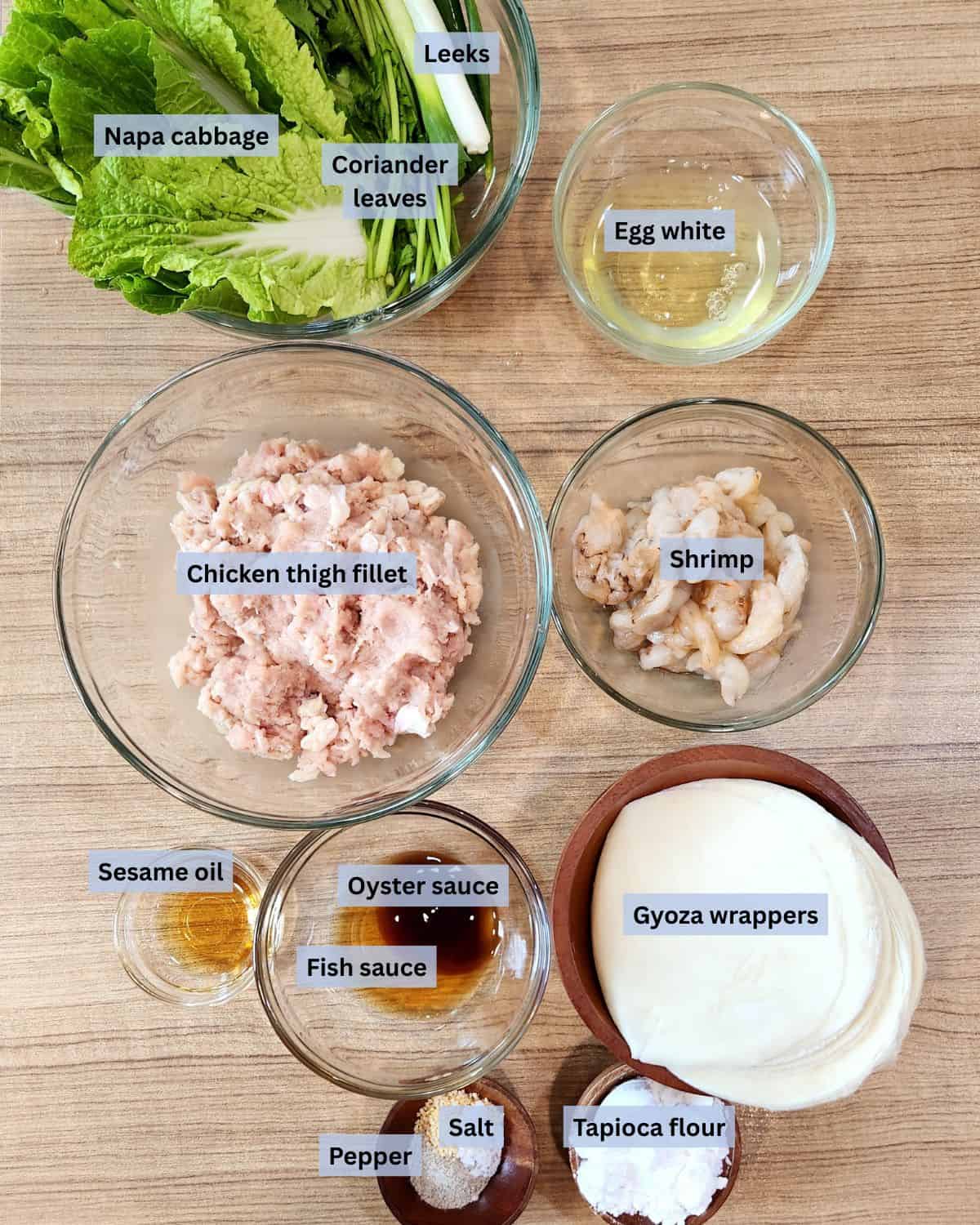
Ingredient Notes
Gyoza Wrappers – Use round gyoza wrappers (sometimes labeled as potsticker wrappers) for the best shape and easy folding. Thin wrappers work especially well for crispy chicken gyoza, as they create that signature golden bottom while staying delicate on top.
Napa Cabbage – Finely chop the napa cabbage and squeeze out as much moisture as possible before mixing it into the filling. This step prevents watery chicken gyoza and keeps the texture juicy but not soggy. If you prefer extra crunch, use more of the white stem portion.
Be sure to check out the full recipe and ingredient list below
How to Make Chicken Gyoza

STEP 1. Peel the shrimp and devein. Rinse with clean water. Soak the shrimp in 1 cup (240 ml) water + 1 tsp baking soda for 10 minutes to improve the springy texture (Image 1). Rinse very well, then chop coarsely (Image 2). Chop the cabbage, leeks, and coriander leaves finely (Images 3, 4).

STEP 2. Use a fine cheesecloth to press the water out of the chopped vegetables (Image 5). Mix all the ingredients in a bowl (Image 6). Use a fork to stir well until all ingredients are well blended (Image 7). Take about 1–2 tsp, don’t overfill, put on a wrapper (Image 8). Use a little bit of water to dab the sides of the wrapper.

STEP 3. Fold and pinch the sides firmly (Image 9). You may pinch 2-3 parts of the wrapper to create pleats (Image 10). Continue until the fillings is used up (Image 11). Prepare the frying pan with a little oil. Heat a thin layer of oil over medium heat, then arrange the gyoza in a single layer, flat-side down (Image 12).

STEP 4. Let the gyoza fry at the bottom until golden brown (Image 13). Pour in some water (Image 14). It doesn’t have to be full, just enough to cover the bottom of the pan. Put on the lid (Image 15). Let it cook for 5 – 7 minutes until the water is dried up. Once the bottoms are golden brown, carefully add water (it will sizzle) — just enough to cover the bottom of the pan. Cover and steam until the water evaporates (Image 16). Uncover and let the bottoms crisp again for 30–60 seconds, then serve..
Pro Tips
- Use round gyoza wrappers – Round wrappers are easier to fold and seal neatly. If you only have square wonton wrappers, trim them into circles using a glass or cookie cutter for better pleating and presentation.
- Remove excess moisture from the vegetables – After finely chopping the cabbage, squeeze out as much liquid as possible using a clean kitchen towel or cheesecloth. This prevents watery filling and helps your chicken gyoza stay juicy without becoming soggy.
- Use more of the white cabbage stems for crunch – The white stem portion of napa cabbage adds a pleasant bite to the filling. Balance it with some leafy parts for texture without making the mixture too soft.
- Don’t overcrowd the pan – Arrange the gyoza in a single layer with space between them. Overcrowding lowers the pan temperature and prevents that signature crispy bottom.
- For extra crispiness, fry uncovered at the end – After steaming and the water has evaporated, remove the lid and let the bottoms crisp again for 30–60 seconds. If you prefer even more crunch, gently tilt and brown the sides as well.

Serving Suggestions
Serve these crispy chicken gyoza with garlic chili oil for a spicy, savory kick. Start with a light starter like egg drop soup or or a simple side of green beans garlic for a comforting, balanced meal.
For a heartier spread, pair them with bold dishes like Szechuan tofu pork or eggplant stir fry with ground pork. If you prefer something milder, spinach silken tofu or a classic chow mein makes a great complement without overpowering the dumplings.
To finish the meal on a refreshing note, serve mango sago dessert or bua loy Thai dessert (Thai Glutinous Rice Balls in Coconut Milk). Both are lightly sweet and perfect for cooling down after a savory feast.
Love chicken appetizers and dumplings? Find more Asian chicken recipes to try at home.
Chicken Gyoza FAQs
Yes, you can make chicken gyoza gluten-free by using certified gluten-free dumpling wrappers. Also substitute regular soy sauce with gluten-free tamari for both the filling and dipping sauce.
To prevent chicken gyoza from sticking, heat the pan well before adding oil and arrange them in a single layer without overcrowding. After browning, add water and cover immediately to steam. The steam helps release the dumplings naturally before the final crisping stage.
Yes. You can replace the chicken filling with a mixture of finely chopped mushrooms, tofu, napa cabbage, and aromatics. Be sure to squeeze out excess moisture to prevent soggy vegetarian gyoza.
You can freeze uncooked chicken gyoza for up to 2 months. Arrange them in a single layer on a tray until frozen solid, then transfer to a freezer bag. Cook directly from frozen — no need to thaw.
Potstickers (Chinese guo tie) and gyoza (Japanese dumplings) are similar but differ in wrapper thickness, filling texture, and cooking style. Gyoza typically use thinner wrappers and a more finely minced filling, resulting in a lighter, crisp-tender bite.
Yes, you can air fry chicken gyoza for a lighter, crispy option. Lightly spray the dumplings with oil and arrange them in a single layer in the air fryer basket. Cook at 375°F (190°C) for 8–10 minutes, flipping halfway through, until the wrappers are golden and the filling is cooked through. Keep in mind that air-fried gyoza will be crisp all around rather than having the traditional pan-fried crispy bottom.

Storage and Reheating
To freeze uncooked chicken gyoza:
Arrange the dumplings in a single layer on a tray lined with parchment paper, making sure they do not touch. Freeze until solid (about 1–2 hours), then transfer them to a freezer-safe bag or airtight container. This prevents them from sticking together. They can be stored in the freezer for up to 2 months.
Cook directly from frozen, there is no need to thaw. Simply add 1–2 extra minutes to the steaming step when pan-frying.
To store cooked chicken gyoza:
Let them cool completely, then refrigerate in an airtight container for up to 2 days.
To reheat, pan-fry over low to medium heat until heated through and the bottoms crisp up again. You can use a microwave for convenience, but the wrappers may lose some crispiness.
If you enjoyed this recipe, don’t miss my collection of Easy Chinese Recipes featuring over 40 homemade Chinese dishes, from quick weeknight stir fries to comforting noodle bowls and classic family favorites.


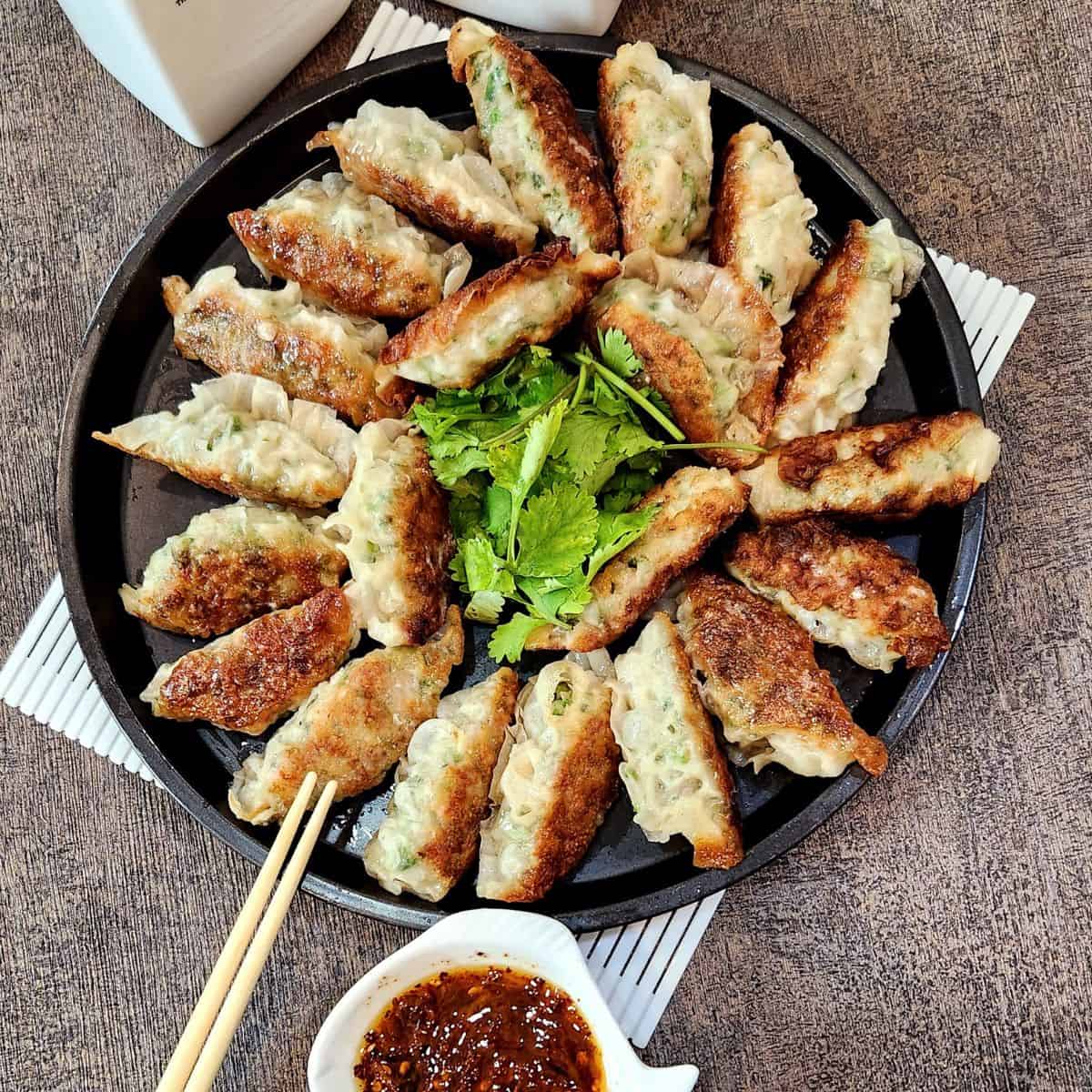
Chicken Shrimp Potstickers (Gyoza)
Ingredients
- 300 gr chicken thigh fillet
- 100 gr shrimp
- 75 gr napa cabbage
- 20 gr leeks
- 25 gr cilantro
- 40 gr egg white
- 2 tbsp tapioca flour
- ½ tbsp oyster sauce
- ½ tbsp sesame oil
- ½ tbsp fish sauce
- ½ tsp salt
- ½ tsp pepper
- Wonton wrappers
Instructions
- Peel the shrimp and devein. Rinse with clean water. Soak the deveined shrimp with a teaspoon of baking soda or lye water for 10 minutes. Rinse well with clean water. Chop the shrimp coarsely. Chop the cabbage, leeks, and coriander leaves finely.
- Use a fine tofu cloth to press the water out of the chopped vegetables. Mix all the ingredients in a bowl. Use a fork to stir well until all ingredients are well blended. Take one to two teaspoons of the fillings, put on a wrapper. Use a little bit of water to dab the sides of the wrapper.
- Fold and pinch the sides firmly. You may pinch 2-3 parts of the wrapper to create pleats. Continue until the fillings is finished. Prepare the frying pan with a little oil. Line up the potstickers without waiting for the oil to heat up.
- Let the potsticker fry at the bottom until brownish. Pour in some water. It doesn't have to be full, only enough to soak them for 0.5-1 cm. Put on the lid. Let it cook for a while until the water is dried up. The bottom of the potstickers should be brown and crispy enough and the sides of the dumplings are soft and shiny from the steam created within the lid. Take out of the pan and they are ready to consume.
Video
Notes
- Pick wonton wrapper with the round shape. You save the time. If you only have square shape wrapper, cut them round using a glass.
- Squeeze the water out of the chopped vegetables.
- Use the white part of the cabbage more so the potstickers filling has some crunchy texture.
- If you like a more crunchy gyoza, fry the sides of the dumplings too.


Chicken potstickers are perfect for weeknights or weekends gatherings! They are so easy to make and very delicious, too. My family loves this recipe so much!