

Easy Pork Shao Mai Recipe (Chinese Dim Sum Dumplings)
 This post may contain affiliate links.
If shao mai is one of the first dishes you reach for at dim sum, you’ll love this homemade version. These Chinese pork and shrimp dumplings are juicy, flavorful, and surprisingly easy to make at home. Wrapped in wonton wrappers and steamed until tender, they’re perfect for a family meal, snack, or special dim sum brunch.

A Quick Look at the Recipe
🏷️ Recipe Name: Pork Shao Mai
⏱️ Ready In: ~ 30 minutes
🍽️ Serves: 18 pieces
🔥 Calories: 74 kcal per serving (estimate)
🧾 Main Ingredients: Pork, shrimp, sesame oil, oyster sauce, pepper, sugar, salt, fish sauce, egg white, onion, green onion, tapioca flour, carrot.
🥗 Dietary Info: Non-halal
🧠 Difficulty: Easy for beginner.
Have a question? Ask AI!
Shao Mai, also known as siu mai or shumai, is one of the most popular Chinese dim sum dumplings. These open-topped steamed dumplings are typically filled with seasoned ground pork, shrimp, and mushrooms, then garnished with a colorful topping such as grated carrot, green peas, or crab roe. If you’ve ever enjoyed Chinese steamed pork patty, you’ll recognize the juicy, savory flavor of the filling, though shao mai is wrapped and steamed as individual dumplings.
Unlike potstickers and wontons, shao mai are always served open-topped and are usually steamed rather than pan-fried or boiled. Their juicy pork and shrimp filling and signature shape make them one of the most recognizable dishes served at dim sum restaurants.
Why You Will Love This Recipe
Recipe Ingredients

Ingredient Notes
Pork shoulder – I recommend pork shoulder because it has the perfect balance of lean meat and fat, keeping the shao mai juicy and flavorful.
Shrimp – Use raw shrimp for the best texture. I like to roughly chop the shrimp instead of turning it into a paste so you can still enjoy little bites of shrimp in the filling.
Dried shiitake mushrooms – Dried shiitake mushrooms add a deeper umami flavor than fresh mushrooms. Soak them in warm water until softened before using.
Wonton wrappers – Round wrappers are traditionally used for shao mai, but square wonton wrappers work just as well. Simply trim the corners after filling if you prefer the classic shape.
Tapioca flour – Tapioca flour helps bind the filling and gives the shao mai a springy, bouncy texture. Cornstarch can be used as a substitute, though the texture will be slightly less chewy.
Fish sauce – Fish sauce adds savory depth without making the filling taste fishy. If you prefer, substitute with light soy sauce.
Oyster sauce – Oyster sauce contributes sweetness, umami, and richness to the filling. For a lighter flavor, use vegetarian oyster sauce made from mushrooms.
Be sure to check out the full recipe and ingredient list below
How to Make Shao Mai

STEP 1. Soak the dried shiitake mushrooms in warm water until softened, then finely chop them (Images 1, 2). Heat a little oil in a pan and sauté the onion and green onion until fragrant and softened, about 2-3 minutes (Images 3, 4). Remove from the heat and let cool.

STEP 2. Place the pork shoulder in a food processor and pulse until coarsely ground. Add the shrimp and pulse a few more times until combined but still slightly chunky (Images 5, 6). Transfer the mixture to a large mixing bowl and add the chopped shiitake mushrooms (Image 7). Stir in the sautéed onion and green onion mixture (Image 8).
Avoid over-processing the shrimp. Small pieces of shrimp give the shao mai a better texture than a completely smooth paste.
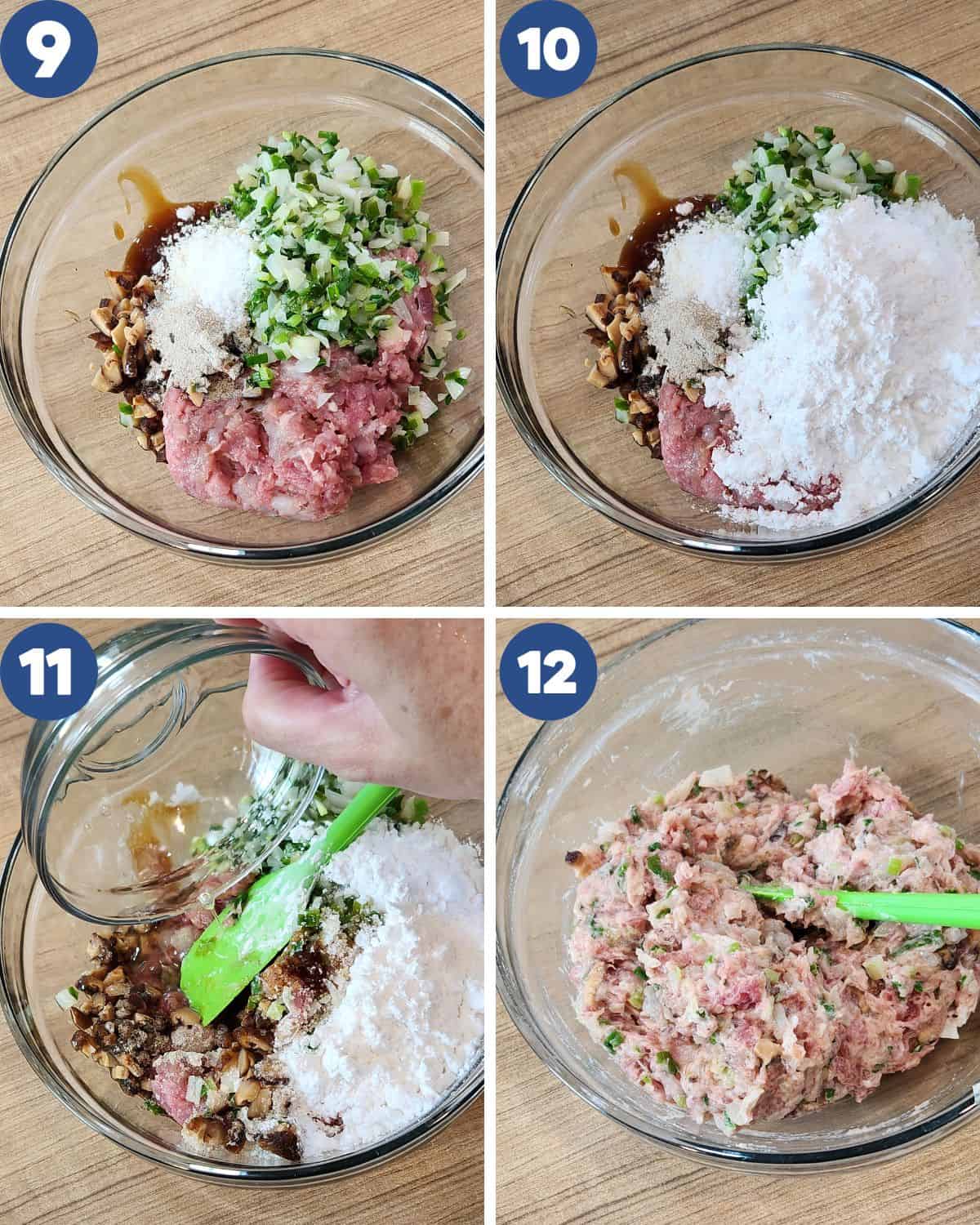
STEP 3. Add the sugar, salt, pepper, oyster sauce, fish sauce, sesame oil, and tapioca flour (Images 9, 10). Pour in the egg white (Image 11). Mix well with a spatula or your hands until the filling becomes sticky and evenly combined (Image 12).

STEP 4. Place a wonton wrapper in the palm of your hand. Spoon about 1 tablespoon of filling into the center and gently press the wrapper around the filling to form an open-top cylinder or classic shao mai shape (Image 13). Arrange the shao mai on a lightly oiled tray and top each one with grated carrot (Images 14, 15).
Keep the unused wrappers covered with a damp towel to prevent them from drying out while shaping the shao mai.
STEP 5. Bring the steamer to a boil. Place the tray in the steamer and steam over medium heat for about 20 minutes, or until the filling is fully cooked through (Image 16). Serve hot with your favorite chili sauce or dipping sauce.

Pro Tips
- Use fatty pork – Pork shoulder or ground pork with about 20–25% fat keeps the shao mai juicy and tender after steaming.
- Keep the shrimp slightly chunky – Don’t blend the shrimp into a smooth paste. Small shrimp pieces give the filling a better bite and springy texture.
- Let the sautéed aromatics cool first – Cool the onion and green onion before adding them to the meat mixture so they don’t warm the raw filling.
- Mix until sticky – Stir the filling until it becomes sticky and well combined. This helps the shao mai hold together and gives it a bouncy texture.
- Keep wrappers covered – Wonton wrappers dry out quickly, so cover the unused ones with a damp towel while shaping.
- Preheat the steamer – Make sure the steamer is already boiling before adding the shao mai. This helps them cook evenly and stay juicy.
Serving Suggestions
Shao Mai is best eaten fresh and steamy, just the way dim sum dreams are made. Serve it with garlic chili oil for a spicy, savory kick, alongside soft, fluffy cheese mantou or naturally sweet pumpkin mantou or crispy fried shrimp ball, char siu (Chinese BBQ pork), or crispy pork belly for that full-on dim sum experience.
For drinks, you can’t go wrong with a cold oolong milk tea or a bold assam milk tea if you like something stronger.
Looking for more homemade Chinese dishes? Explore my Easy Chinese Recipes collection for more authentic recipes, including chicken, pork, beef, seafood, vegetables, rice, noodles, and dim sum. For even more pork dishes, browse my Asian Pork Recipes collection.

Shao Mai FAQs
Shao mai is distinct for its open-top feature, allowing the filling to peek through. You can’t peek through other dumplings like Jiao zi or Gyoza or Har Gao.
Yes, you can make gluten-free Xiu mai by using gluten-free wrappers, which are available in some stores, or making your own at home. Additionally, make sure that all the other ingredients, including sauces and seasonings, are gluten-free.
Yes, you can prepare Shumai in advance, steam and freeze them. Arrange the cooked Shumai on a tray lined with parchment paper and freeze them until solid.
Storage
Uncooked shao mai can be frozen—place them on a tray to freeze, then store in an airtight container for up to 1 month. Steam straight from frozen, adding a few extra minutes.
Cooked shao mai can be kept in the fridge for up to 3 days. Reheat by steaming is the best way!
Looking for more homemade Chinese dishes? Explore my Easy Chinese Recipes collection for more authentic recipes, including chicken, pork, beef, seafood, vegetables, rice, noodles, and dim sum.


Pork Shao Mai with Shrimp
Ingredients
- 300 gr ground pork chicken thigh
- 75 gr shrimp minced coarsely
- ½ tbsp sesame oil
- ½ tbsp oyster sauce
- ½ tsp pepper
- 18 gr sugar
- 4 gr salt
- ½ tbsp fish sauce
- 20 gr egg white
- 50 gr onion sauteed
- 28 gr green onion sauteed
- 88 gr tapioca flour
- Shredded carrot for decoration
Instructions
- Soak the dried shiitake mushrooms in warm water until softened, then finely chop them. Heat a little oil in a pan and sauté the onion and green onion until fragrant and softened, about 2-3 minutes. Remove from the heat and let cool.
- Place the pork shoulder in a food processor and pulse until coarsely ground. Add the shrimp and pulse a few more times until combined but still slightly chunky. Transfer the mixture to a large mixing bowl and add the chopped shiitake mushrooms. Stir in the sautéed onion and green onion mixture.
- Add the sugar, salt, pepper, oyster sauce, fish sauce, sesame oil, and tapioca flour. Pour in the egg white. Mix well with a spatula or your hands until the filling becomes sticky and evenly combined.
- Place a wonton wrapper in the palm of your hand. Spoon about 1 tablespoon of filling into the center and gently press the wrapper around the filling to form an open-top cylinder or classic shao mai shape. Arrange the shao mai on a lightly oiled tray and top each one with grated carrot.
- Bring the steamer to a boil. Place the tray in the steamer and steam over medium heat for about 20 minutes, or until the filling is fully cooked through. Serve hot with your favorite chili sauce or dipping sauce.
Video
Notes
- Use fatty pork – Pork shoulder or ground pork with about 20–25% fat keeps the shao mai juicy and tender after steaming.
- Keep the shrimp slightly chunky – Don’t blend the shrimp into a smooth paste. Small shrimp pieces give the filling a better bite and springy texture.
- Let the sautéed aromatics cool first – Cool the onion and green onion before adding them to the meat mixture so they don’t warm the raw filling.
- Mix until sticky – Stir the filling until it becomes sticky and well combined. This helps the shao mai hold together and gives it a bouncy texture.
- Keep wrappers covered – Wonton wrappers dry out quickly, so cover the unused ones with a damp towel while shaping.
- Preheat the steamer – Make sure the steamer is already boiling before adding the shao mai. This helps them cook evenly and stay juicy.


This is the best shao mai recipe I have ever tried! Quick and easy and the result is even better than dim sum takeouts!