

How to Make Homemade Pandan Extract (From Fresh Pandan Leaves)
 This post may contain affiliate links.
This homemade pandan extract guide shows you how to make natural pandan extract from fresh pandan leaves in just a few simple steps. It delivers a vibrant green color and a deep, fragrant aroma that artificial pandan essence can’t match, making it ideal for baking and desserts. I use this extract in many traditional Southeast Asian cakes, breads, and snacks, and it can be stored in the refrigerator for several weeks for easy, anytime baking.

A Quick Look at the Recipe
🏷️ Recipe Name: Homemade Pandan Extract
⏱️ Ready In: ~ 1 day 10 minutes
🍽️ Serves: 100 ml
🧾 Main Ingredients: Pandan leaves, suji leaves, water.
🥗 Dietary Info: Gluten free
🧠 Difficulty: Very easy
Have a question? Ask AI!
What is Pandan Extract?
Pandan extract is a natural green liquid made from blending fresh pandan leaves with water and then straining the mixture. When the pandan juice is left to rest in the refrigerator for a day or two, the heavier green sediment settles at the bottom of the container. This concentrated layer is what gives pandan extract its deep color and aroma and is commonly used in baking and desserts.
Pandan leaves, also known as screwpine, are tropical leaves widely used in Southeast Asian cooking and baking. They are commonly sold fresh, but can also be found frozen or dried in some countries. Pandan’s flavor is often described as grassy with subtle notes of rose, almond, vanilla, and coconut, while its fragrance is frequently compared to the aroma of basmati rice.
Pandan leaves have long been used in Southeast Asian cooking and traditional remedies. You can read more about the potential benefits and uses of pandan leaves in this overview from Healthline.
Why Homemade Pandan Extract Is Better
Recipe Ingredients

Substitutions & Variations
Pandan leaves are more readily available than suji leaves in most markets. While suji leaves produce a richer, more vibrant green color, pandan leaves make an excellent substitute when suji isn’t available – simply use them in the same quantity.
One important note: suji leaves should be used sparingly. Unlike pandan, they can impart a bitter flavor if used in excess, so moderation is key.
Pandan Extract Subsitute
If you can’t find pandan leaves in your area, you may want to look for pandan essence powder or the dried leaves. It is available online. It is easier to keep as it has longer shelf life.
You also may want to check Asian grocery store if they sell pandan essence. It’s worth keeping one bottle if you like to bake. Even though the fragrance and color of the store-bought pandan essence can’t beat the homemade one, it is still worth keeping for practical purposes.
This homemade extract works especially well in cakes, breads, and traditional Southeast Asian desserts that rely on pandan extract for both aroma and color.
How to Make Pandan Extract

STEP 1. Blend the pandan leaves. Wash the pandan leaves thoroughly, then cut them into smaller pieces. Place the chopped pandan leaves into a blender (Image 1) and pour in the water (Image 2). Blend for a few minutes until the leaves are fully broken down and the mixture turns deep green (Images 3, 4).
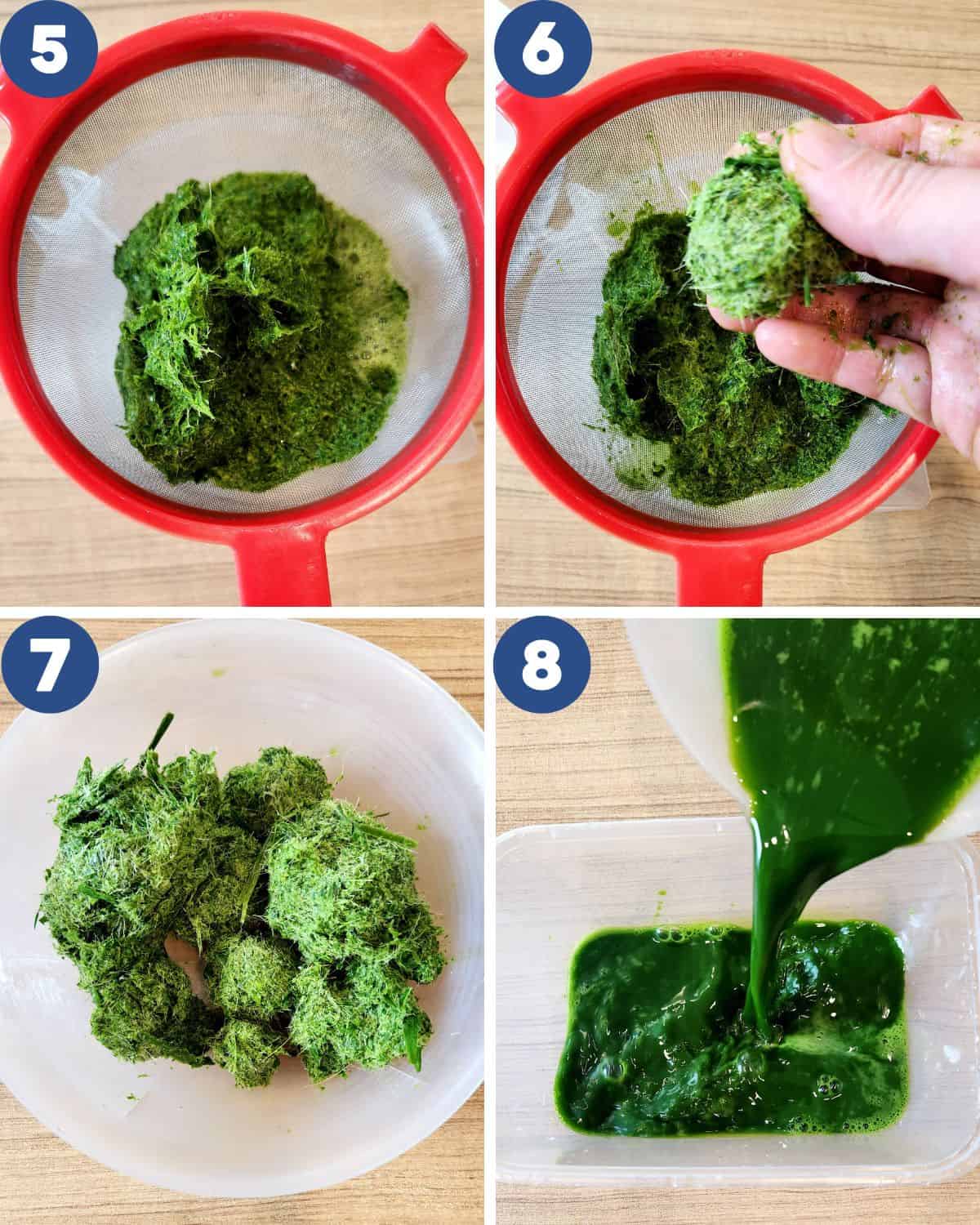
STEP 2. Strain the pandan juice. Strain the blended mixture through a fine-mesh strainer (Image 5). Press and squeeze the pandan pulp firmly to extract as much liquid as possible (Images 6, 7). Discard the fibrous pulp and pour the extracted juice into a clean container (Image 8).

STEP 3. Separate the extract. Cover the container and refrigerate the pandan juice overnight or up to two days (Image 9). During this time, the heavier green sediment will settle at the bottom, leaving clearer liquid on top (Image 10).
Using a ladle or spoon, gently remove the water layer without disturbing the sediment (Image 11). The thick, concentrated pandan extract remaining at the bottom is what you will use for baking and desserts (Image 12). Transfer it to a clean bottle and store it in the refrigerator for several weeks.

Pro Tips
- Let the extract settle longer for a thicker concentration – Allow the pandan juice to rest in the refrigerator for a few days instead of overnight. The longer resting time helps more green sediment settle at the bottom, resulting in a thicker, more concentrated extract.
- Use suji leaves sparingly – Suji leaves can be added to enhance the green color, but they should be used in small amounts. Unlike pandan leaves, suji leaves can impart a bitter flavor if used excessively.
- Use reverse osmosis (RO) water for better keeping quality – Using RO water can help extend the shelf life of the extract. Always store the pandan extract in a clean, dry, airtight bottle to prevent contamination.
- Use a slow juicer for easier extraction (optional) – A slow juicer can be used instead of a blender to extract the pandan juice directly. This method eliminates the need to squeeze the pulp and results in a cleaner extraction process.
How to Use Pandan Extract
Pandan extract is widely used in baking and desserts to add a fragrant aroma and natural green color. It works especially well in cakes and snacks, from soft sponge cakes and non-dairy bakes to traditional treats like steamed apem and pan-fried pukis.
In addition to baking, pandan extract can be added to coconut-based desserts and batters where pandan aroma is a key flavor component.
If you prefer using whole pandan leaves, they are also very versatile. Pandan leaves can be used to perfume rice, steamed glutinous rice, and coconut-based preparations. You can also simmer pandan leaves with coconut milk to infuse it with a deeper, more fragrant aroma before using it in desserts.
Recipes That Use Pandan Extract
Pandan extract is incredibly versatile and appears in many traditional and modern Southeast Asian desserts. Below are some of my favorite recipes that use homemade pandan extract for aroma, flavor, and natural green color.
🍰 Pandan Cakes & Baked Desserts
These recipes rely on pandan extract to flavor the batter evenly and give a soft, fragrant crumb.
- Pandan Castella Cake – A light, spongy cake infused with pandan extract.
- Pandan Chiffon Cake – Soft, airy, and fragrant, this chiffon cake showcases pandan extract beautifully.
- Pandan Cake (Non-Dairy) – A dairy-free pandan cake made with coconut milk for a nostalgic, old-fashioned flavor.
- Pandan Burnt Basque Cheesecake – A creamy cheesecake with a subtle pandan aroma that becomes more fragrant when served.
🥞 Traditional Snacks & Street-Style Cakes
Pandan extract is essential in these classic treats, adding aroma and color without overpowering the texture.
- Putu Ayu Pandan – Steamed pandan sponge cakes topped with grated coconut.
- Kue Apem Pandan – A traditional steamed rice cake flavored with pandan extract.
- Pukis Pandan – Soft Indonesian coconut milk cake infused with pandan for a fragrant bite.
- Pandan Serabi – Indonesian-style pancakes flavored with pandan extract and cooked until lightly crisp on the edges.
🍞 Pandan Breads & Yeast-Based Bakes
In bread recipes, pandan extract adds both visual appeal and gentle aroma.
- Roti Sisir Pandan – A classic pull-apart pandan bread, perfect with a thin layer of butter.
- Pandan Milk Bread – Soft, fluffy bread with a lush green color and earthy pandan fragrance.
🍚 Sticky Rice & Chewy Desserts
These desserts depend on pandan extract for their signature aroma and traditional character.
- Pandan Wajik – Sweet sticky rice cooked with coconut milk and pandan extract.
- Mini Chewy Pandan Bika Ambon – Honeycomb cakes with a chewy texture and pandan-infused batter.
- Klepon – Glutinous rice balls filled with palm sugar and flavored with pandan extract.
- Kuih Seri Muka – A two-layer dessert combining pandan custard and glutinous rice.
- Kuih Kosui – A soft, chewy steamed cake with pandan flavor and coconut topping.
Pandan Extract FAQs
Homemade extract typically lasts between 2 to 4 weeks when refrigerated in an airtight container. The extract’s shelf life can vary based on factors like the freshness of the leaves used, the extraction method, and storage conditions.
Yes, you can freeze it to extend its shelf life. Pour the extract into ice cube trays and freeze. Once frozen, transfer the cubes to a freezer-safe bag or container. The shelf life for the frozen essence is up to 3 months.
Sure! This green extract adds a unique, aromatic flavor to beverages. It can be used in teas, smoothies, milkshakes, and even in cocktails. Its sweet, grassy flavor complements many ingredients, adding a tropical and aromatic twist to drinks.
Yes, there is often a noticeable difference in flavor and color between homemade and store-bought essence. Homemade extract usually has a fresher, more vibrant flavor and aroma, as it lacks preservatives and artificial additives found in some commercial products.
Storage
For longer shelf life, keep the extract in a dry and clean bottle in the chiller. It can stay fresh for up to 4 weeks. If you plan to keep it longer, keep it frozen. It can last for 3 months. Shake the bottle before use after thawing.

Homemade Pandan Extract
Equipment
Materials
- 30 pcs pandan
- 15 pcs suji if you don’t have these, you can change it to 15 pcs pandan leaves
- 300 gr water
Instructions
- Wash clean the pandan leaves. Cut into smaller pieces and put them in a blender. Pour in the water in
the blender. Blend for a few minutes. - Strain the juice. Press the blended leaves tightly until it no longer has water in it.
- Keep the juice in a container and in a fridge.
- The next day or two, you can see some sediment at the bottom. Take a ladle and slowly take the water on top without stirring the sediment.
- You can do this again the next day. If you keep the juice for 2 days in the fridge, there will be more sediment at the bottom.
- The pandan sediment is the pandan extract. It should be thick and dark green in color.
- Keep the pandan extract in a bottle and put in the fridge for two weeks. Shake the bottle before use.
Video
Notes
- You may let the extract sink in for a few days to get a thicker extract. You will get more sediment at the bottom of your container.
- Do not use too many suji leaves because it has a bitter flavor in it. You can use it to add more lush green color.
- Use reverse osmosis water for longer shelf life. Keep it in a dry and clean bottle to avoid contamination.
- You can use slow juice to get the juice out for easier processing. That way you don’t need to squeeze the leaves out.


This is the best ratio of pandan leaves extract recipe with the easiest method you can try at home! I have tried this many times when I want to stock up my pandan extract. It is so versatile you will love it so much!