

Klepon Recipe (Ondeh Ondeh) – Indonesian Coconut Balls with Palm Sugar
 This post may contain affiliate links.
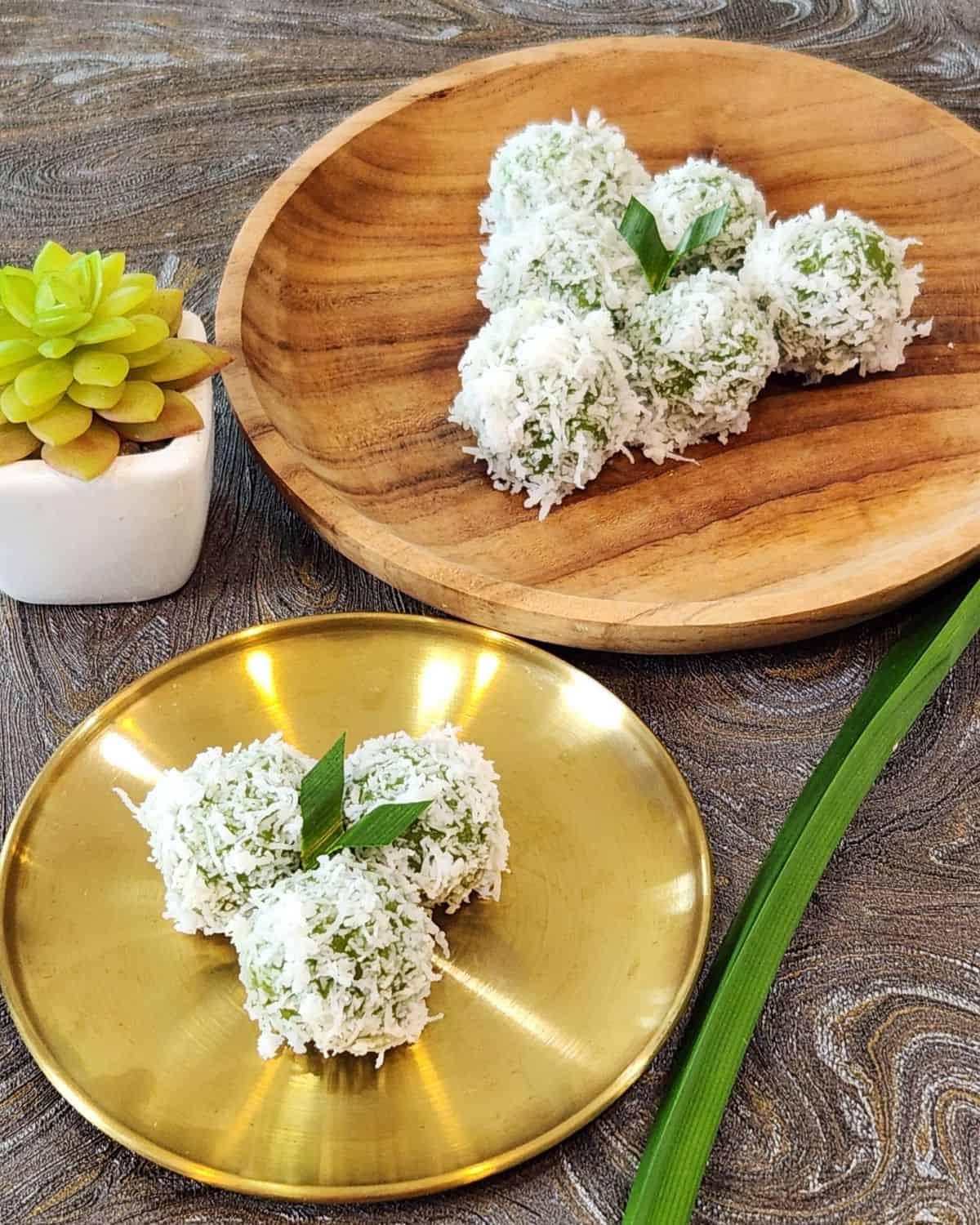
Klepon, known as Ondeh Ondeh in Malaysia and Singapore, is a chewy Indonesian dessert made with glutinous rice flour, filled with molten palm sugar, and coated in freshly grated coconut.

A Quick Look at the Recipe
🏷️ Recipe Name: Klepon or Ondeh Ondeh
⏱️ Ready In: ~ 35 minutes
🍽️ Serves: 20 pieces
🔥 Calories: 79 kcal per piece (estimate)
🧾 Main Ingredients: Glutinous rice flour, tapioca flour, coconut milk, pandan extract, sugar, salt, coconut sugar, shredded coconut, pandan leaves.
🥗 Dietary Info: Gluten free
🧠 Difficulty: Very easy.
Have a question? Ask AI!
Klepon, also known as Ondeh-Ondeh, is a chewy Indonesian dessert made from glutinous rice flour, naturally colored and fragranced with homemade pandan extract, filled with molten palm sugar (gula jawa), and coated in freshly grated coconut. One bite releases a warm, sweet burst of caramel-like palm sugar that makes this traditional snack so irresistible.
One bite is all it takes for that liquid gula jawa (palm sugar) to burst in your mouth. Most locals will tell you, never bite klepon in half. Pop the whole thing in for the full surprise!
Since many Indonesian desserts rely on glutinous rice flour, rice flour, and tapioca flour, they’re naturally gluten-free. Recipes like Putri Mandi, Ongol Ongol, and Pandan Wajik are great examples of traditional treats that don’t require wheat flour.
Since many Indonesian desserts use glutinous rice flour, rice flour, and tapioca flour rather than wheat flour, they’re naturally gluten-free. That makes treats like Klepon a delicious option for anyone looking for wheat-free desserts.
Why You Will Love This Recipe
Recipe Ingredients
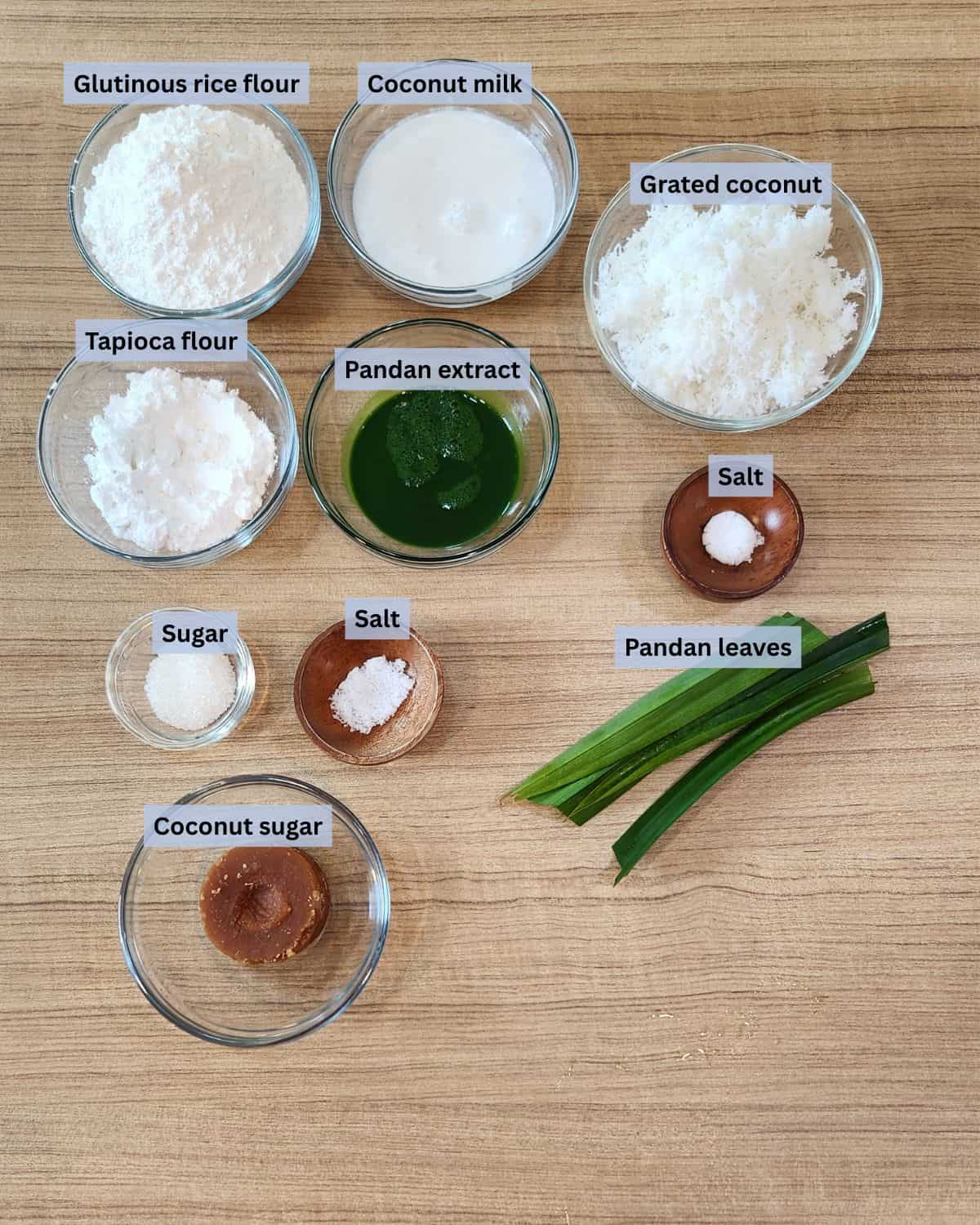
Ingredient Notes
Coconut Sugar – Also known as gula jawa or gula aren, this unrefined sugar is made from the sap of coconut palm flowers. It has a rich, caramel-like flavor that melts beautifully inside Klepon, creating that signature sweet burst. You can slice or shave it thinly for easier filling. If you can’t find coconut sugar, dark palm sugar or Thai gula merah can be a good substitute, just make sure it’s soft enough to melt quickly when cooked.
Grated Coconut – For the best flavor and texture, use freshly grated coconut. Steam it for about 15 minutes, then mix in ½ teaspoon of salt.
If fresh coconut isn’t available, you can use desiccated coconut as a substitute, just don’t skip the rehydration step. Steam it for 15 minutes to soften and bring it closer to the texture of fresh coconut.
Variations
- Purple Sweet Potato – Adding mashed purple sweet potato to the dough gives it a beautiful purple hue and a slightly sweeter, chewier texture.
- Sweet Potato – You can also use sweet potato for a soft orange-yellow color and mild earthy sweetness.
- Pumpkin – Mashed pumpkin works well too, but keep an eye on the moisture level, pumpkin has higher water content, so adjust the liquid ingredients as needed.
- Klepon-Inspired Cake – In Indonesia, a popular café once introduced a Klepon Cake: a pandan layer cake filled with grated coconut and coconut sugar, then topped with mini klepon balls. It’s a creative way to enjoy the classic flavor in a modern dessert!
How to Make Klepon / Ondeh Ondeh

STEP 1. In a bowl, combine glutinous rice flour, tapioca flour, sugar, and salt (Image 1). Add coconut milk and pandan extract (Image 2), then stir with a spatula until a smooth, non-sticky dough forms (Image 3). Slice or finely chop the coconut sugar for easy filling (Image 4), then set it aside.

STEP 2. Scoop a portion of dough using a tablespoon. Press the center with your thumb to create a small well, then fill it with about 1 teaspoon of coconut sugar (Images 5, 6). Seal the dough tightly and roll it gently between your palms to form a smooth ball (Image 7). Repeat until all the dough is used up (Image 8).

STEP 3. Steam the freshly grated coconut with pandan leaves and a pinch of salt for about 15 minutes (Images 9, 10). Meanwhile, bring a pot of water to a boil, add pandan leaves and ½ teaspoon of salt to infuse the water with aroma. Carefully drop the klepon into the boiling water (Images 11, 12).

STEP 4. Let the klepon cook until they float to the surface, this means they’re done (Image 13). Use a slotted spoon to remove them and immediately toss them in the steamed grated coconut (Images 14, 15), making sure they’re fully coated (Image 16). Serve warm or at room temperature, ideally with a cup of tea or herbal drink on the side.
Pro Tips
- Use a measuring spoon to portion the dough evenly so all your klepon cook at the same time and look uniform.
- Lightly brush the spoon with oil to prevent the sticky dough from sticking, it’ll pop out much more easily.
- Slice or finely chop the coconut sugar to help it melt quickly inside the dough and create that gooey center.
- Seal the dough tightly around the sugar to avoid any leaks while boiling. Roll it gently between your palms until smooth.
- Don’t overcrowd the pot when boiling, give the klepon enough space to float freely and cook evenly.
- Coat while warm – Toss the klepon in grated coconut while still warm so the coconut sticks better.

Serving Suggestions
Klepon is best enjoyed fresh and slightly warm, when the palm sugar center is still molten and the grated coconut is at its freshest. These bite-sized treats make a perfect afternoon snack or tea-time dessert.
Pair them with a warm drink like Wedang Jahe, Lemon Ginger Tea, or Lemongrass Pandan Tea. If you prefer something creamy, Rose Milk Tea or Assam Milk Tea make wonderful companions.
For a traditional Indonesian dessert spread, serve Klepon (Ondeh Ondeh) alongside Gemblong, Kue Awug, or Kuih Seri Muka.
Klepon FAQs
Klepon is made from glutinous rice flour, water, and pandan extract for its chewy green dough. It’s filled with melted coconut sugar (gula jawa) and rolled in grated coconut after boiling.
In Indonesia, Klepon refers to the glutinous rice ball with palm sugar filling. But in Malaysia and Singapore, the same dessert is called Ondeh-Ondeh.
Yes. Klepon is typically made with glutinous rice flour and tapioca flour rather than wheat flour, making it naturally gluten-free. Always check individual ingredients if you have specific dietary concerns.
Absolutely. Purple sweet potato, pumpkin, sweet potato, butterfly pea flower, or pandan can all be used to create different colors and flavors while keeping the same chewy texture.
Klepon or ondeh ondeh may not leak palm sugar if the dough is too thick, the palm sugar pieces are too large, or the filling has not fully melted during cooking. Using finely chopped palm sugar and sealing the dough properly helps create the signature molten center.
Storage
This dessert is best enjoyed fresh, as it doesn’t have a long shelf life. At room temperature, it stays fresh for only about a day, especially in a cool environment.
If you need to store it longer, keep the klepon in an airtight container in the fridge for up to 2 days. Before serving, reheat by steaming for about 10–15 minutes to bring back its soft and chewy texture.
Looking for more naturally gluten-free treats from Asia? Browse these Asian gluten-free desserts.

Klepon Pandan (Ondeh Ondeh)
Ingredients
Dough
- 100 gr glutinous rice flour
- 25 gr tapioca flour
- 75 ml coconut milk
- 25 ml pandan extract
- ½ tbsp sugar
- ½ tsp salt
Filling
- 100 gr Coconut sugar sliced thinly
For the skin
- 200 gr shredded coconut
- ½ tsp salt
- 2 pcs pandan leaves
Instructions
- In a bowl, combine glutinous rice flour, tapioca flour, sugar, and salt. Add coconut milk and pandan extract, then stir with a spatula until a smooth, non-sticky dough forms. Slice or finely chop the coconut sugar for easy filling, then set it aside.
- Scoop a portion of dough using a tablespoon. Press the center with your thumb to create a small well, then fill it with about 1 teaspoon of coconut sugar. Seal the dough tightly and roll it gently between your palms to form a smooth ball. Repeat until all the dough is used up.
- Steam the freshly grated coconut with pandan leaves and a pinch of salt for about 15 minutes. Meanwhile, bring a pot of water to a boil, add pandan leaves and ½ teaspoon of salt to infuse the water with aroma. Carefully drop the klepon into the boiling water.
- Let the klepon cook until they float to the surface—this means they’re done. Use a slotted spoon to remove them and immediately toss them in the steamed grated coconut, making sure they’re fully coated. Serve warm or at room temperature, ideally with a cup of tea or herbal drink on the side.
Video
Notes
- Use a measuring spoon to portion the dough evenly so all your klepon cook at the same time and look uniform.
- Lightly brush the spoon with oil to prevent the sticky dough from sticking—it’ll pop out much more easily.
- Slice or finely chop the coconut sugar to help it melt quickly inside the dough and create that gooey center.
- Seal the dough tightly around the sugar to avoid any leaks while boiling. Roll it gently between your palms until smooth.
- Don’t overcrowd the pot when boiling—give the klepon enough space to float freely and cook evenly.
- Coat while warm – Toss the klepon in grated coconut while still warm so the coconut sticks better.


I love how easy it is to make this dessert. This really saves me when my friends suddenly pay me a visit. I also love the pandan flavor and the sweet burst of coconut sugar in the mouth.