

Lidah Kucing Recipe – Indonesian Cat Tongue Cookies
 This post may contain affiliate links.
Lidah Kucing, or Indonesian cat tongue cookies, are thin, crisp, and buttery cookies that melt in your mouth. Similar to French langues de chat, these delicate cookies are especially popular in Indonesia during Eid, Christmas, and other celebrations.
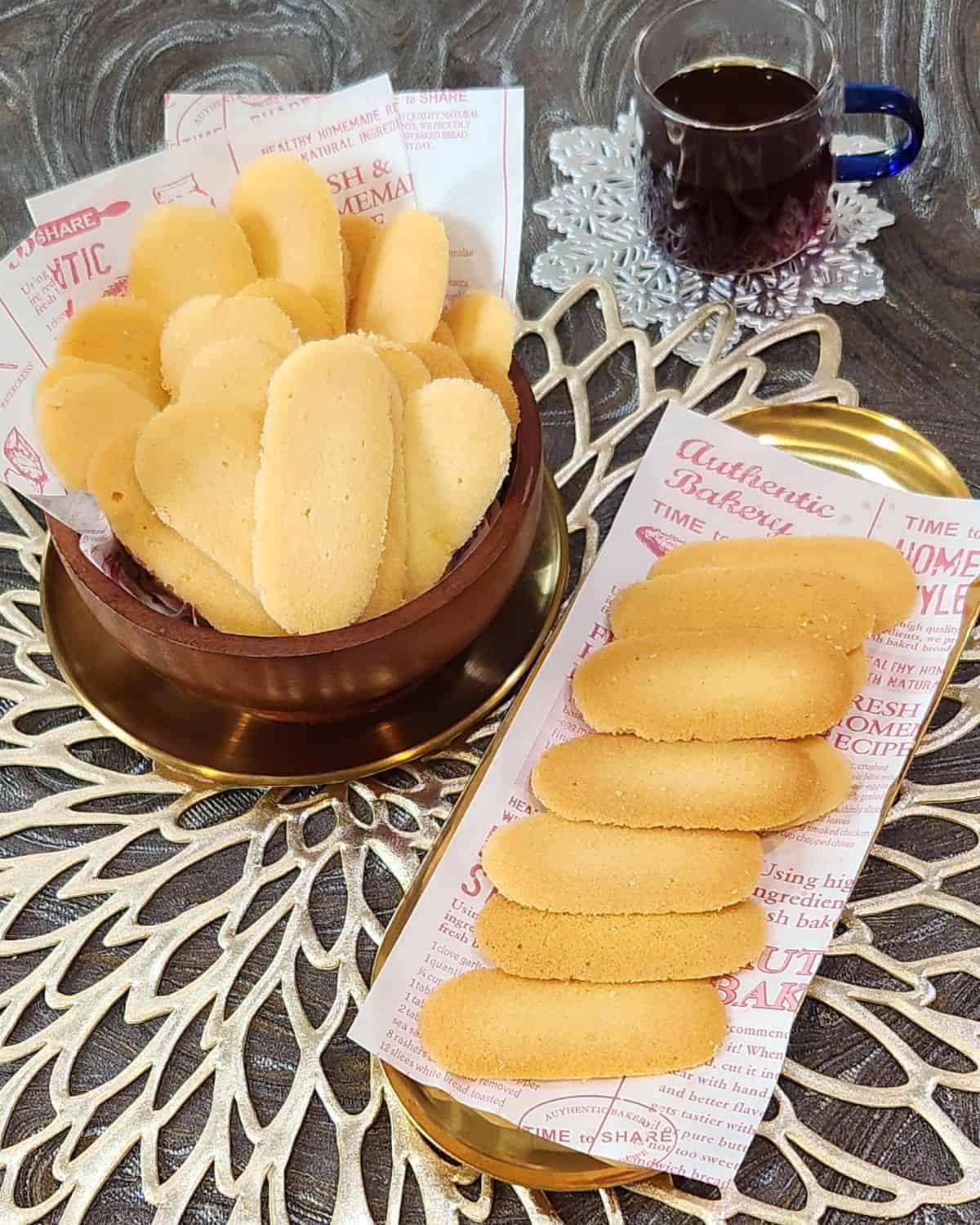
A Quick Look at the Recipe
🏷️ Recipe Name: Cat Tongue Cookies (Lidah Kucing)
⏱️ Ready In: ~ 34 minutes
🍽️ Serves: 100 pieces
🔥 Calories: 42 kcal per serving (estimate)
🧾 Main Ingredients: Powdered sugar, salt, butter, margarine, flour, milk powder, egg white, .
🥗 Dietary Info: Vegetarian friendly.
🧠 Difficulty: Very easy.
Have a question? Ask AI!
In Indonesia, Cat Tongue Cookies (Lidah Kucing) are almost everyone’s favorite. These crisp, delicate cookies are part of nearly every celebration, appearing on festive trays during Idul Fitri gatherings, Christmas cookie exchanges, and Lunar New Year celebrations. You’ll often spot them alongside custard cookies, cheese cookies, speculaas cookies, coffee bean cookies, and nastar (pineapple tart). Light, buttery, and subtly sweet, they’re always the first to disappear from the table.
Their story dates back to the Dutch colonial era, when European baking traditions blended with local creativity. Alongside heritage cakes like lapis legit, lapis surabaya, dutch butter cake, and ontbijtkoek, Lidah Kucing grew into one of Indonesia’s most beloved festive cookies.
Why You Will Love This Recipe
Recipe Ingredients

Ingredient Notes
Butter – The key to perfect cat tongue cookies. The better the butter, the more flavorful your cookies will be. Choose your favorite high-quality brand.
Be sure to check out the full recipe and ingredient list below
Variations
Once you master the basic cat tongue cookies, it’s easy to get creative! In Indonesia, you’ll find so many colorful versions of Lidah Kucing, each one with its own charm.
- Matcha – Add a little matcha powder to the batter for a subtle green hue and earthy flavor that balances the sweetness.
- Pandan – Mix in a bit of pandan extract for a fragrant tropical twist that tastes nostalgic and comforting.
- Chocolate – Replace part of the flour with cocoa powder to create a rich, chocolatey version that’s perfect for gifting.
- Cheese – Sprinkle grated cheddar or parmesan on top before baking for a salty-sweet combination that’s totally addictive.
You can even divide the batter and make two flavors in one batch, a fun way to add color and variety to your cookie jars during Idul Fitri, Christmas, or Chinese New Year.
How to Make Cat Tongue Cookies

STEP 1. In a bowl, add room-temperature butter, powdered sugar, salt, and vanilla extract (Image 1). Gently mix with a spatula first to prevent the sugar from scattering when you start the hand mixer (Image 2). Beat until the butter mixture becomes light, pale, and creamy (Images 3, 4).

STEP 2. Sift the flour and milk powder (Image 5). Use your spatula to mix it before mixing it with a hand mixer (Image 6). Mix with a hand mixer and pour in egg white gradually while mixing (Image 7). When it is incorporated, transfer the batter into a piping bag (Image 8).

STEP 3. Pipe the batter onto a cat tongue cookies pan, or a regular flat baking tray if you don’t have one (Images 9, 10). Make each strip about 5–6 cm long (Image 11). Bake in a preheated oven at 285°F (140°C) for about 24 minutes, turning the pan halfway through for even coloring. Let the cookies cool completely on a rack before storing in an airtight jar (Image 12). Enjoy your crisp, buttery cat tongue cookies!
Pro Tips
- Use good-quality butter. It’s the soul of this recipe, better butter means richer aroma and flavor.
- Bring ingredients to room temperature. Soft butter and egg whites mix more smoothly, giving the cookies an even texture.
- Don’t overmix the batter. Once the flour is incorporated, stop mixing to keep the cookies crisp and delicate.
- Pipe evenly. Aim for 5–6 cm strips with consistent thickness so they bake evenly and brown at the same time.
- Rotate the tray halfway. Turning the tray at 12 minutes ensures the cookies bake evenly, especially in smaller ovens.
- Cool completely before storing. Any leftover warmth can trap moisture and make the cookies lose their crispness.
- Store in an airtight jar. These lidah kucing cookies stay crisp for up to one month when stored properly in a dry place.
Serving Suggestions
Cat tongue cookies are best enjoyed fresh out of the jar with a warm drink in hand. Their light, buttery crispness pairs beautifully with red ginger tea, lychee soda, oolong milk tea, or earl grey milk tea.
They’re also lovely for festive gatherings like Idul Fitri, Christmas, or Chinese New Year, served alongside other treats such as mini sponge cakes or lapis legit. Arrange them on a pretty tray or gift them in jars for a thoughtful homemade touch.

Cat Tongue Cookies FAQs
The name comes from their long, thin shape that looks like a cat’s tongue. In French, they’re known as Langues de Chat, and the Indonesian version, Lidah Kucing keeps that same cute name.
If your cookies turn soft, they may be underbaked or stored before cooling completely. Bake until the edges are golden brown and let them cool fully before sealing in a jar.
Yes! You can use any flat baking tray lined with parchment paper. Just pipe the batter into thin 5–6 cm strips and bake as usual.
You can, but butter gives a much richer aroma and classic taste. Margarine will make the texture slightly firmer and less fragrant.
Storage
Let the cat tongue cookies cool for a while before storing. You have to immediately transfer the cookies after a few minutes into a jar to keep them from being soggy. Keep them in an airtight jar at room temperature to maintain their crispness. When stored properly, they stay fresh and crunchy for up to one month.
More Cookies Recipes
- Custard Cookies
- Coffee Bean Cookies
- Banana Soft Almond Cookies
- Matcha Chocolate Chip Cookies
- Ube Crinkle Cookies

Cat Tongue Cookies – Lidah Kucing
Equipment
- 1 cat tongue cookies pan
Ingredients
- 175 gr powdered sugar
- 2 gr salt
- 255 gr unsalted butter
- 60 gr margarine
- 300 gr flour
- 30 gr milk powder
- 80 gr egg white
Instructions
- In a bowl, add room-temperature butter, powdered sugar, salt, and vanilla extract. Gently mix with a spatula first to prevent the sugar from scattering when you start the hand mixer. Beat until the butter mixture becomes light, pale, and creamy.
- Sift in the flour and milk powder. Use a spatula to fold lightly before mixing with the hand mixer. While mixing, gradually pour in the egg whites until everything is well incorporated. Transfer the smooth batter into a piping bag.
- Pipe the batter onto a cat tongue cookies pan, or a regular flat baking tray if you don’t have one. Make each strip about 5–6 cm long. Bake in a preheated oven at 285°F (140°C) for about 24 minutes, turning the pan halfway through for even coloring. Let the cookies cool completely on a rack before storing in an airtight jar. Enjoy your crisp, buttery cat tongue cookies!
Video
Notes
- Use good-quality butter. It’s the soul of this recipe , better butter means richer aroma and flavor.
- Bring ingredients to room temperature. Soft butter and egg whites mix more smoothly, giving the cookies an even texture.
- Don’t overmix the batter. Once the flour is incorporated, stop mixing to keep the cookies crisp and delicate.
- Pipe evenly. Aim for 5–6 cm strips with consistent thickness so they bake evenly and brown at the same time.
- Rotate the tray halfway. Turning the tray at 12 minutes ensures the cookies bake evenly, especially in smaller ovens.
- Cool completely before storing. Any leftover warmth can trap moisture and make the cookies lose their crispness.
- Store in an airtight jar. These cat tongue cookies stay crisp for up to two weeks when stored properly in a dry place.


I love how quick and easy it is to whip these cookies! They are crisp, tender, and melt in the mouth!