

Chinese Scallion Oil for Stir Fry Dishes
 This post may contain affiliate links.
Chinese scallion oil, also known as ginger scallion oil, is a fragrant aromatic oil commonly used in Chinese cooking, especially as a base for stir-fry dishes. It’s made by gently cooking scallions and ginger in oil until fragrant, allowing the aromatics to release their flavor without browning.

A Quick Look at the Recipe
🏷️ Recipe Name: Chinese Scallion Oil (Ginger Scallion Oil)
⏱️ Ready In: ~ 15 minutes
🍽️ Serves: 180 cc
🔥 Calories: 11 kcal per tablespoon (estimate)
🧾 Main Ingredients: Shallots, garlic, ginger, scallion, oil.
🥗 Dietary Info: Gluten free
🧠 Difficulty: Very easy
Have a question? Ask AI!
Chinese scallion oil is a fragrant cooking oil made by gently infusing hot oil with scallions and ginger. In Chinese cooking, it’s commonly used to build aroma before stir-frying vegetables, noodles, rice, and meat dishes.
Unlike ginger scallion sauce, which is served as a condiment, Chinese scallion oil is primarily used for cooking. It adds depth and fragrance to stir-fries without needing to prepare fresh aromatics every time.
Whether you’re making Steamed Pork Patty with preserved vegetables, Chinese eggplant stir fry with ground pork, or a simple Egg Fried Rice, using scallion oil at the start of cooking gives your dish a richer, more rounded flavor. It delivers the aroma of freshly cooked scallions without needing to prep aromatics every time.
I always keep a bottle of scallion oil in my kitchen because it saves so much time. It’s perfect for quick mie goreng, beef chow mein, as a finishing drizzle for egg drop soup, or even to enhance dumplings and dipping sauces. Once you start cooking with it, scallion oil quickly becomes one of those essentials you reach for again and again.
Why You Will Love This Recipe
Recipe Ingredients
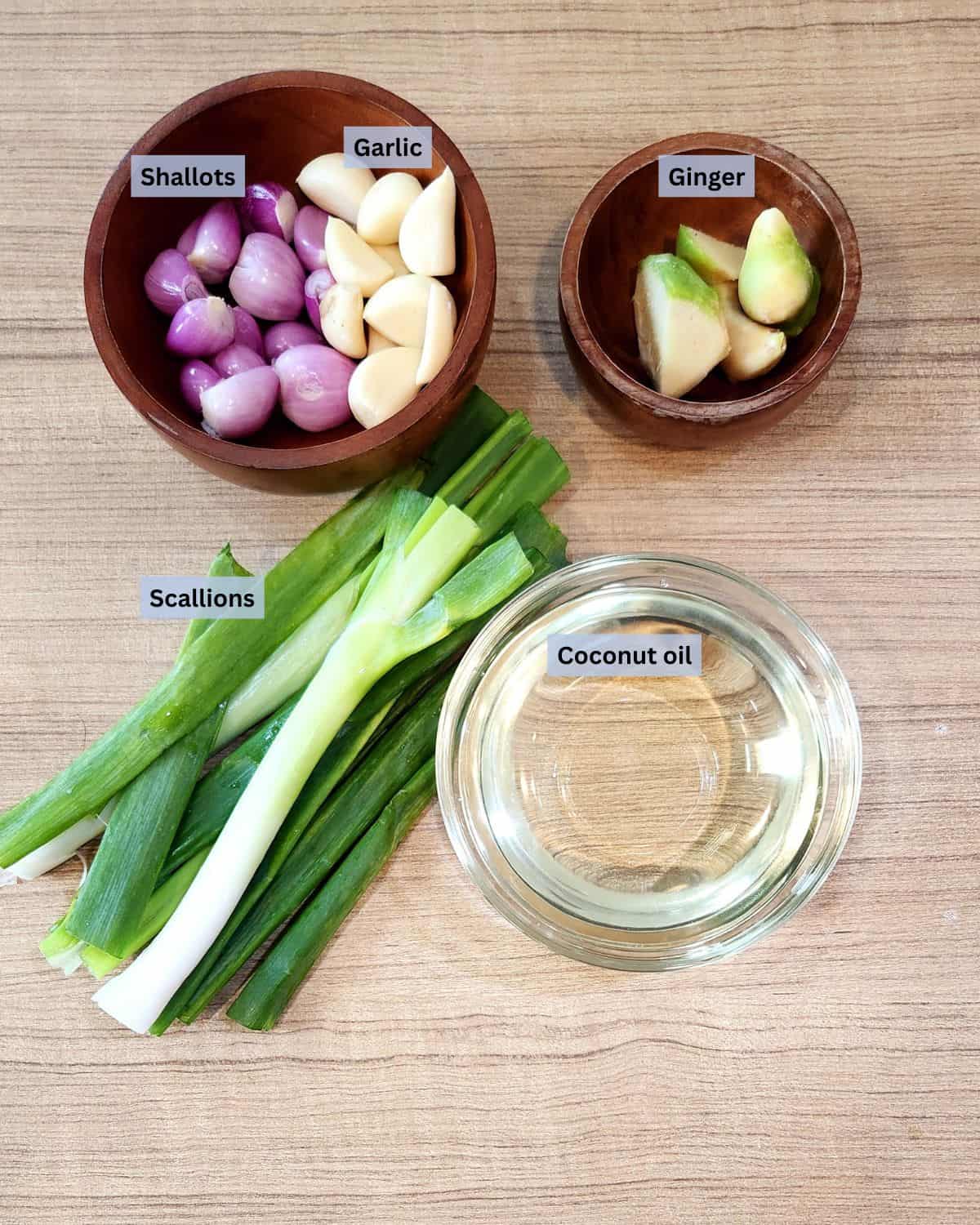
Ingredient Notes
Shallots, garlic,ginger, scallions – These four ingredients are mostly used in Asian cooking. The flavor and fragrance are unique, when combined they deliver a fresh aromatic flavor.
Coconut oil – Coconut oil is best for it is odorless and colorless. You can use other neutral oils: vegetable oil or olive oil.
Substitutions & Variations
The ingredients for scallion oil can be customized to suit your taste. Choose bold, aromatic options like ginger, garlic, shallots, and scallions. You can also add onions, lemongrass, rosemary, star anise, or bay leaves for extra depth. Fresh herbs like cilantro, oregano, or thyme are also great choices for a unique twist.
Be sure to check out the full recipe and ingredient list below
How to Make Scallion Oil

STEP 1. Prep & dry (important for safety). Wash the scallions and ginger thoroughly. Rinse well and let them air-dry completely (or pat very dry). Any moisture can cause the oil to splatter. Sterilize your jar/bottle by boiling it for 5–10 minutes, then let it dry fully. Cut scallions into 5 cm lengths (or slice into thick pieces), and slice the ginger (Images 1, 2). Pour neutral oil into a pan and warm it over low heat (Image 3). Add the scallions and ginger (Image 4).

STEP 2. Gently cook until fragrant. Keep the heat low and cook slowly until the scallions soften and the oil smells fragrant. Do not let the scallions brown deeply (it can turn bitter). Turn off the heat once the aroma is strong and the scallions are lightly golden at most (Images 5, 6, 7). Strain the oil into your sterilized bottle for a clean finish (Image 8).
Store your flavored oil near the stove for easy access. The next time you’re making a stir-fry, just add a splash to instantly boost the flavor of your dish.
How to Use Scallion Oil in Chinese Stir Fry Dishes
Once your scallion oil is ready, here are some of my favorite ways to use it in everyday Chinese stir-fry dishes.
Vegetable Stir-Fries – Scallion oil is perfect for vegetable-based stir-fries, adding aroma without overpowering delicate flavors. Try it in dishes like:
Noodles & Rice Dishes – Using scallion oil as the base instantly boosts the flavor of noodles and rice dishes:
Egg, Tofu & Quick Protein Dishes – For fast weeknight cooking, scallion oil provides depth without extra prep:
Pro Tips
- Use fresh scallions and ginger for the best aroma. Avoid any that look slimy, bruised, or moldy, as this can affect both flavor and shelf life. Rinse well to remove dirt, then dry thoroughly.
- Moisture is your enemy. Any excess water can cause the oil to splatter dangerously during cooking. Let the scallions and ginger air-dry completely, or pat them dry with a clean kitchen towel before adding them to the oil.
- Keep the heat low and steady. Scallions should gently release their aroma without browning. If they turn dark too quickly, the oil can taste bitter.
- Label and date your oil. Homemade scallion oil contains no preservatives, so it won’t last as long as store-bought oils. Writing the date on the bottle helps you keep track of freshness.
Scallion Oil FAQs
Yes, you can freeze scallion oil, but it may solidify depending on the type of oil used. For best results, use a freezer-safe container, and thaw it at room temperature before use.
Onion can be used instead of leeks, but it may give a slightly sweeter flavor.
Yes, you can add seasonings like salt, pepper, star anise, or Sichuan peppercorns to the oil for extra depth and aroma. Just be careful not to burn them while infusing.
It’s best not to keep the cooked herbs in the bottle. Leaving them in the oil can cause them to become soggy and may reduce the oil’s shelf life due to moisture. Strain them out for a cleaner, longer-lasting oil.
Neutral oils like vegetable oil, canola oil, or coconut oil work best for scallion oil.
While you can use olive oil, it may not be the best choice for Chinese scallion oil because of its strong flavor.

Storage
Homemade scallion oil can be stored for up to two weeks in a cool, dark place, but it’s best kept in the refrigerator to extend freshness.

Chinese Scallion Oil (Ginger Scallion Oil)
Equipment
- 1 wok
Ingredients
- 10 cloves garlic
- 10 shallots
- 5 stalks scallions
- 3 pieces ginger
- 200 cc vegetable oil I use coconut oil
Instructions
- Wash the scallions and ginger thoroughly. Rinse well and let them air-dry completely (or pat very dry). Any moisture can cause the oil to splatter.
- Sterilize your jar/bottle by boiling it for 5–10 minutes, then let it dry fully.
- Cut scallions into 5 cm lengths (or slice into thick pieces), and slice the ginger. Pour neutral oil into a pan and warm it over low heat. Add the scallions and ginger.
- Keep the heat low and cook slowly until the scallions soften and the oil smells fragrant. Do not let the scallions brown deeply (it can turn bitter). Turn off the heat once the aroma is strong and the scallions are lightly golden at most. Strain the oil into your sterilized bottle for a clean finish.
- Store your flavored oil near the stove for easy access. The next time you’re making a stir-fry, just add a splash to instantly boost the flavor of your dish.
Video
Notes
- Use fresh scallions and ginger for the best aroma. Avoid any that look slimy, bruised, or moldy, as this can affect both flavor and shelf life. Rinse well to remove dirt, then dry thoroughly.
- Moisture is your enemy. Any excess water can cause the oil to splatter dangerously during cooking. Let the scallions and ginger air-dry completely, or pat them dry with a clean kitchen towel before adding them to the oil.
- Keep the heat low and steady. Scallions should gently release their aroma without browning. If they turn dark too quickly, the oil can taste bitter.
- Label and date your oil. Homemade scallion oil contains no preservatives, so it won’t last as long as store-bought oils. Writing the date on the bottle helps you keep track of freshness.




I love this flavored oil, because it helps a lot in the kitchen. You can cook much faster with this ready in hand! Its aromatic flavor will definitely enhance your dish.