

Kuih Kosui Recipe (Kue Lumpang / Kue Ijo) – Soft & Chewy Pandan Cake
 This post may contain affiliate links.
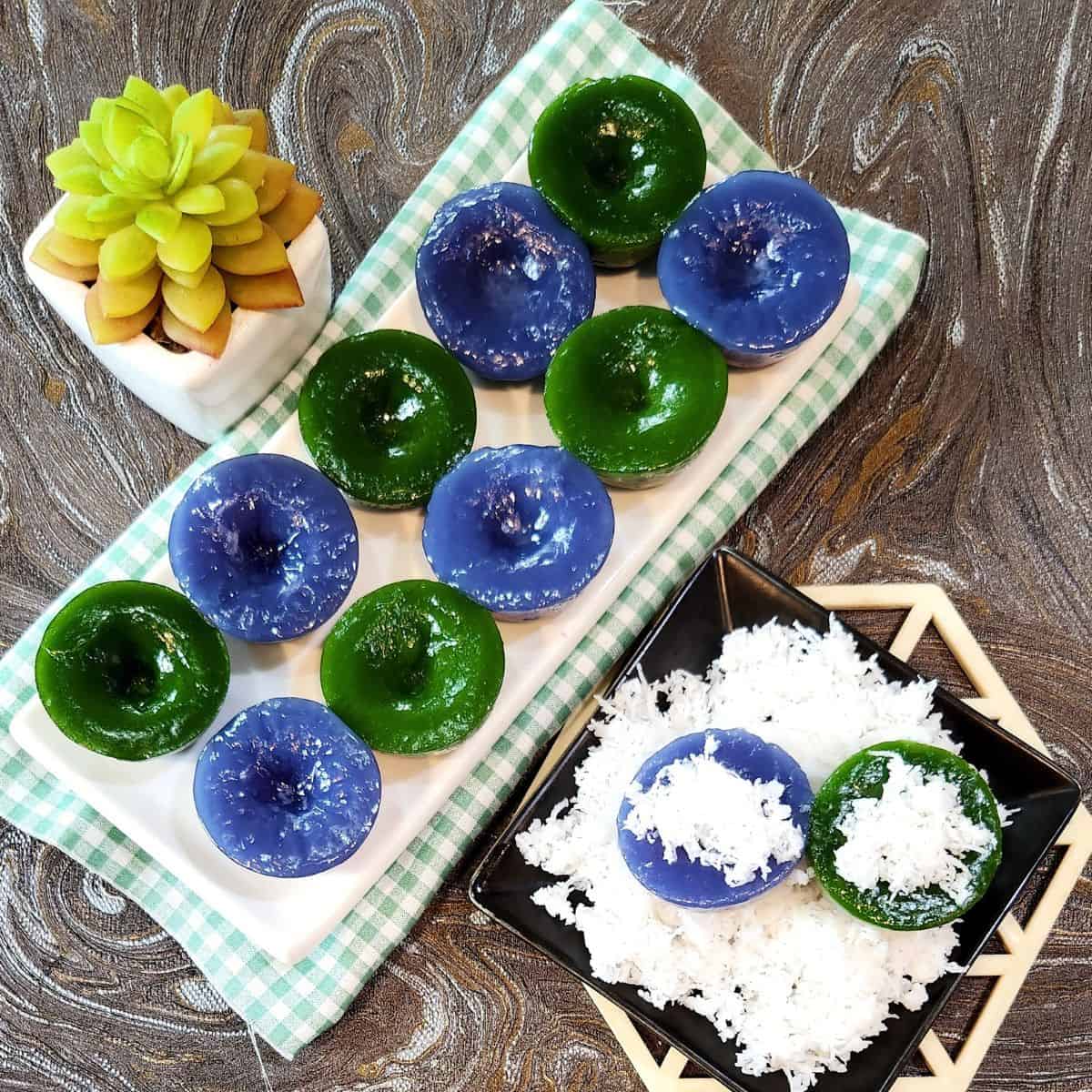
Soft, chewy, and lightly sweet, Kuih Kosui (also known as Kue Lumpang, Kue Ijo, or Kaswi) is a traditional pandan dessert topped with freshly grated coconut. Made with tapioca flour and coconut milk, this naturally gluten-free treat is perfect for afternoon tea or as a light snack.

A Quick Look at the Recipe
🏷️ Recipe Name: Kuih Kosui (Kue Lumpang / Kue Ijo)
⏱️ Ready In: ~ 35 minutes
🍽️ Serves: 27 pieces
🔥 Calories: 87 kcal per piece (estimate)
🧾 Main Ingredients: Tapioca flour, rice flour, sugar, coconut milk, pandan extract, salt, grated coconut, pandan leaves.
🥗 Dietary Info: Gluten free
🧠 Difficulty: Very easy.
Have a question? Ask AI!
Kuih Kosui, also known as Kue Kaswi, is a classic Indonesian dessert made from tapioca flour and coconut milk. It’s steamed in small, pestle-shaped molds, which is why it’s also called Kue Lumpang. “Lumpang” means “pestle” in Indonesian. Another popular name, Kue Ijo, comes from its vibrant green color, thanks to fragrant pandan extract.
This soft, chewy tapioca cake is typically served with a generous topping of steamed grated coconut. Originating from Palembang in West Sumatra, Kue Lumpang is enjoyed across Indonesia and is often found alongside other traditional steamed snacks like Putu Ayu Pandan, which also highlights the classic pandan-and-coconut pairing.
If you enjoy soft and chewy Indonesian desserts, you may also love Klepon, filled with molten palm sugar, or Ongol Ongol, another popular tapioca-based snack coated in fresh grated coconut. Like many traditional jajan pasar treats, Kuih Kosui transforms simple ingredients into a comforting dessert with a bouncy texture, fragrant pandan aroma, and rich coconut flavor.
Why You Will Love This Recipe
Recipe Ingredients
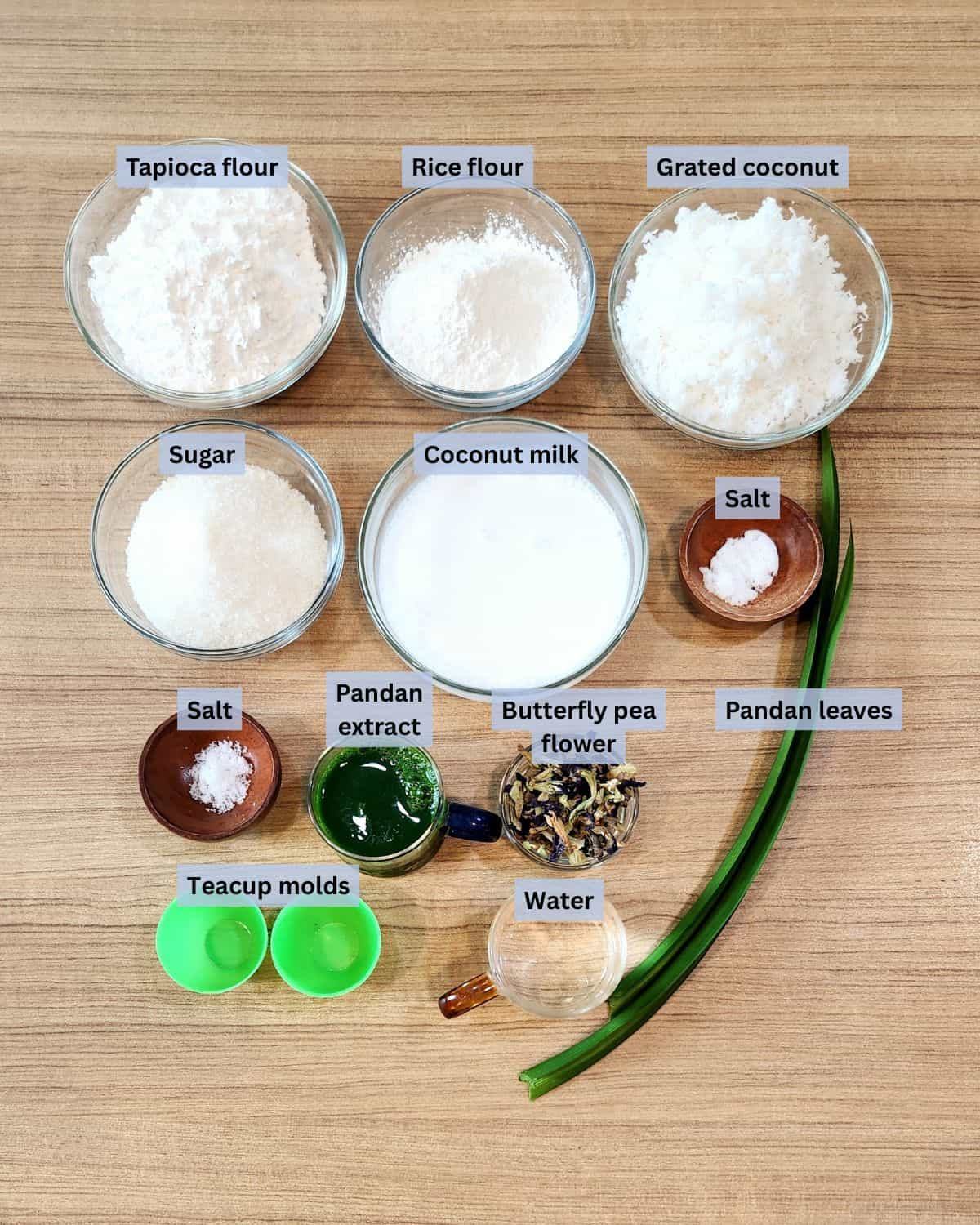
Ingredient Notes
Tapioca Flour – Choose a high-quality, fine tapioca flour for a smooth, chewy texture. Always whisk it thoroughly with water to prevent lumps.
Rice Flour – Use fine rice flour, not glutinous rice flour, for a soft, slightly bouncy texture. Sift it before mixing to ensure a smooth batter.
Coconut Milk – Use fresh, full-fat coconut milk for a rich, creamy flavor. Shake canned coconut milk well before use to mix the layers.
Salt – Use a pinch of fine sea salt to balance the sweetness. Add a little salt to the steamed grated coconut for a savory contrast.
Pandan Extract – Use fresh pandan leaves for the best flavor and vibrant green color. Homemade pandan extract is more fragrant and natural than store-bought.
Butterfly Pea Flower – Steep butterfly pea flowers in hot water to create a natural blue color. Combine with pandan for a stunning two-tone effect.
Be sure to check out the full recipe and ingredient list below
How to Make Kuih Kosui

STEP 1. In a bowl, steep butterfly pea flowers in hot water until the water turns a vibrant blue. Set aside (Image 1). Preheat the steamer. Lightly grease the teacup molds with oil (Image 2). In a mixing bowl, combine tapioca flour, rice flour, sugar, and salt. Gradually add coconut milk while stirring (Image3). Mix until all dry ingredients dissolve completely, creating a smooth batter (Image 4).

STEP 2. If making two colors, divide the batter equally into two bowls (Image 5). If only making pandan flavor, skip this step and double the pandan water. In one bowl, add 75 ml of pandan extract water. Stir well (Image 6). Strain this pandan batter to remove any lumps (Image 7). Pour the pandan batter into the greased molds, filling each 3/4 full (Image 8).

STEP 3. Place the molds on a tray in the preheated steamer. Steam over high heat for 30 minutes (Images 9, 10). The steamed cakes will naturally form cute dimples in the center (Image 11). For the second batch, mix the other bowl of batter with 75 ml of butterfly pea flower water (Image 12).

STEP 4. Strain the blue batter to remove lumps (Image 13) and pour into molds. Steam for another 30 minutes (Image 14). Allow the cakes to cool slightly before removing them from the molds (Image 15). Steam grated coconut with pandan leaves and a pinch of salt for 10 minutes (Image 16). Serve the cooled Kuih Kosui with a generous sprinkle of steamed grated coconut. Enjoy!
Pro Tips
- Make sure your steamer is preheated and producing enough steam before placing the molds inside.
- Lightly grease your molds with a bit of oil to prevent the kuih from sticking, making it easier to remove after steaming.
- Only fill the molds about ¾ full. This allows the kuih to puff slightly without overflowing.
- For the topping, use freshly grated coconut for the best texture and flavor. A pinch of salt balances the sweetness of the kuih and complements the fragrant pandan.
- Allow the Kuih Kosui to cool slightly before removing them from the molds. This helps them set properly and maintain their shape.
Serving Suggestions
Kuih Kosui is best served fresh, topped with lightly salted grated coconut. Its sweet, chewy texture pairs perfectly with a hot cup of Wedang Jahe or Butterfly Pea Flower Tea or Lemongrass Pandan Tea. Enjoy it after a savory Indonesian meal featuring Chicken Rendang, Ayam Balado, or Soto Tangkar. Its sweet, chewy texture provides a pleasant contrast to these rich and spicy dishes.
You can also serve Kuih Kosui alongside other Indonesian snacks like Klepon, Kuih Seri Muka, or Awug, creating an Indonesian Jajan Pasar platter. This way, you get a perfect mix of sweet and savory flavors in one meal.
Kuih Kosui FAQs
Kuih Kosui is a traditional steamed rice cake made primarily from rice flour, tapioca flour, and flavored with either pandan extract or palm sugar (gula melaka). It’s typically topped with freshly grated coconut.
To get the cute dimple in the center of Kuih Kosui, preheat the steamer, make sure the batter is smooth and free of lumps, steam the cakes with medium to high heat.
If you don’t have traditional teacup molds, small muffin tins or silicone molds work well. Just remember to lightly grease them to prevent sticking and to make it easier to remove after steaming.
In many parts of Indonesia, Kuih Kosui and Kue Lumpang refer to the same pandan-flavored steamed cake topped with grated coconut. The name Kue Lumpang comes from the traditional mold used to make the cake, which resembles a small mortar or pestle.

Storage and Reheating
Kuih Kosui is best enjoyed fresh. However, you can store leftovers in an airtight container in the chiller for 2-3 days. Re-steam them for a few minutes to regain their soft, chewy texture.
Remember to separate the grated coconut from the cake when storing in the chiller.
More Traditional Snack Recipes
Looking for more traditional sweets? Browse my collection of Asian Dessert Recipes for more pandan, coconut, and Indonesian dessert favorites.
Kuih Kosui
Equipment
- 27 small teacup molds
Ingredients
- 125 gr tapioca flour
- 50 gr rice flour
- 100 gr sugar
- 200 ml coconut milk
- 150 ml pandan extract water Add 6 tbsp pandan extract with water
- 1 gr salt
Topping
- 150 gr grated coconut
- 1 gr salt
- 2 pcs pandan leaves
Instructions
- In a bowl, steep butterfly pea flowers in hot water until the water turns a vibrant blue. Set aside. Preheat the steamer. Lightly grease the teacup molds with oil. In a mixing bowl, combine tapioca flour, rice flour, sugar, and salt. Gradually add coconut milk while stirring. Mix until all dry ingredients dissolve completely, creating a smooth batter.
- If making two colors, divide the batter equally into two bowls. If only making pandan flavor, skip this step and double the pandan water. In one bowl, add 75 ml of pandan extract water. Stir well. Strain this pandan batter to remove any lumps. Pour the pandan batter into the greased molds, filling each 3/4 full.
- Place the molds on a tray in the preheated steamer. Steam over high heat for 30 minutes. The steamed cakes will naturally form cute dimples in the center. For the second batch, mix the other bowl of batter with 75 ml of butterfly pea flower water.
- Strain the blue batter to remove lumps and pour into molds. Steam for another 30 minutes. Allow the cakes to cool slightly before removing them from the molds. Steam grated coconut with pandan leaves and a pinch of salt for 10 minutes. Serve the cooled Kuih Kosui with a generous sprinkle of steamed grated coconut. Enjoy!
Notes
- Make sure your steamer is preheated and producing enough steam before placing the molds inside.
- Lightly grease your molds with a bit of oil to prevent the kuih from sticking, making it easier to remove after steaming.
- Only fill the molds about ¾ full. This allows the kuih to puff slightly without overflowing.
- For the topping, use freshly grated coconut for the best texture and taste. Steam the grated coconut with a pinch of salt to keep it fresh and prevent it from turning rancid.
- Allow the Kuih Kosui to cool slightly before removing them from the molds. This helps them set properly and maintain their shape.


This recipe only takes less than 5 minutes to prepare and the result is amazing! Chewy, soft, and delicious rice cakes topped with salty, grated coconut. This is definitely a must-try!