

Dong Po Rou Recipe (Chinese Braised Pork Belly) That Melts in Your Mouth
 This post may contain affiliate links.
Dong Po Rou (Chinese braised pork belly) is a famous Chinese dish known for its rich, glossy sauce and melt-in-your-mouth tender texture. Braised low and slow, this dish delivers fork-tender bites packed with deep, aromatic flavor.

A Quick Look at the Recipe
🏷️ Recipe Name: Dong Po Rou
⏱️ Ready In: ~ 2 hours 20 minutes
🍽️ Serves: 6 portions
🔥 Calories: 673 kcal per serving (estimate)
🧾 Main Ingredients: Pork belly, white cooking wine, shao xing wine, dark soy sauce, golden syrup, water, ginger, scallions, garlic, star anise, bay leaves.
🥗 Dietary Info: Gluten free
🧠 Difficulty: Medium with very simple steps.
Have a question? Ask AI!
Dong Po Rou (東坡肉) is one of those Chinese recipes that feels like a warm hug in food form. Originating from the Jiangsu and Zhejiang provinces, this pork belly dish with its five luxurious layers of meat and fat was first popularized by Su Dong Po, the beloved poet and foodie from the Song dynasty. The meat is braised low and slow in soy sauce, Shaoxing wine, and aromatic spices until every layer turns meltingly tender.
Unlike the crackling crunch of crispy roast pork belly, the glossy sweet char siu or the simpler home-style style of hong shao rou, , Dong Po Rou is all about quiet elegance. Its rich, savory-sweet sauce soaks deep into the pork, making it the kind of dish you savor with a simple bowl of rice or fluffy mantou buns, very similar to the comforting style of braised pork shank.
Even compared to the smoky pork jerky, Dong Po Rou is comfort food on a whole different level. Together, these dishes will complete your family dinner in a different way.
Why You Will Love This Recipe
Recipe Ingredients
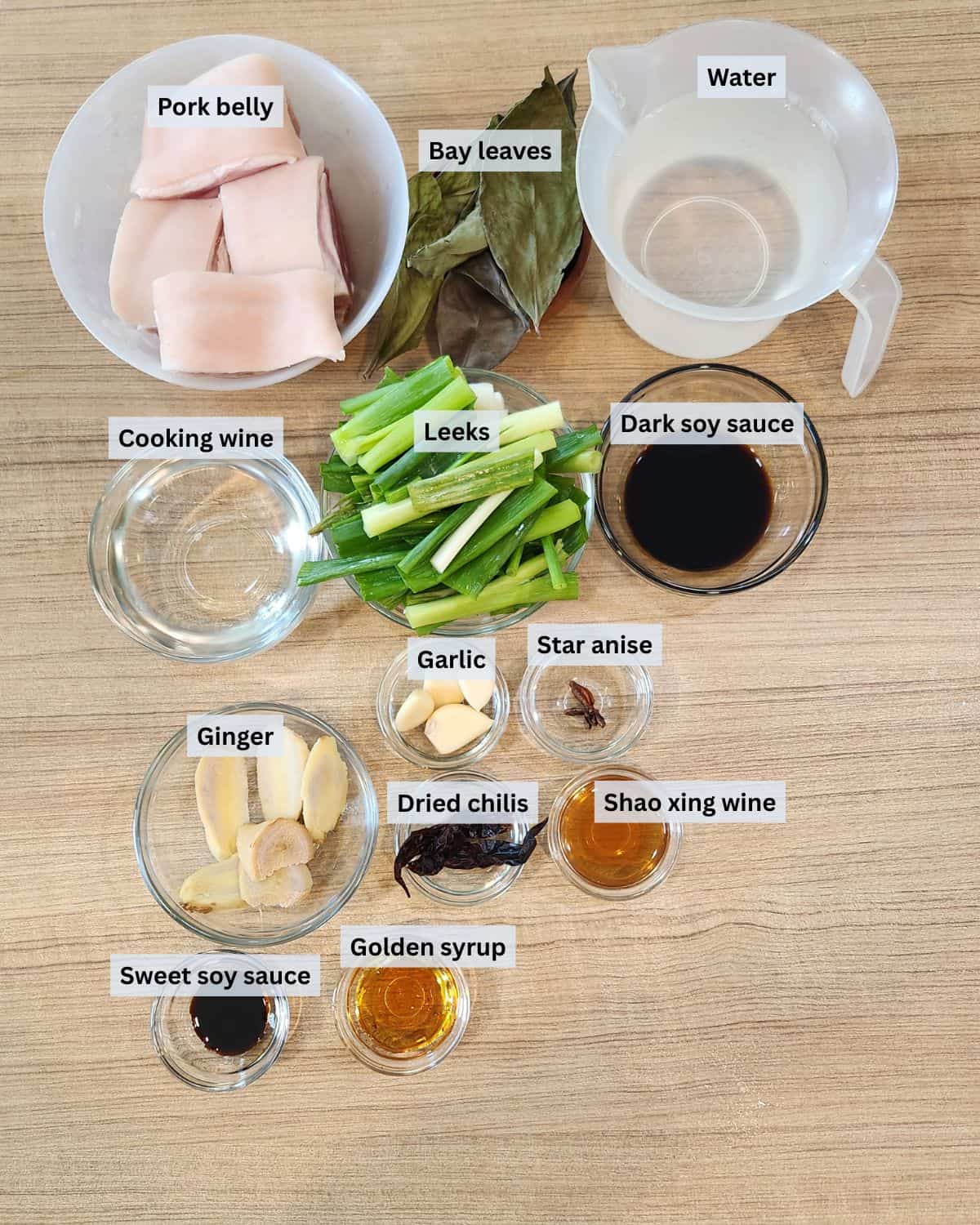
Ingredient Notes
Pork Belly – The star of this dish! Choose a good piece of pork belly with five distinct layers of skin, fat, and meat—known in Chinese as (五花肉) wu hua rou. A square cut with an even top and bottom will cook and present beautifully.
Chinese Claypot – A claypot adds a touch of authenticity and holds heat well, but don’t worry if you don’t have one—a regular heavy-bottomed pot will work just fine.
Cotton Strings – Optional but helpful. Tying the pork belly keeps it firm and prevents it from falling apart during long hours of braising.
Golden Syrup / Rock Sugar – Golden syrup adds a beautiful caramelized depth to the sauce. You can make your own easily (check out my homemade golden syrup recipe), or substitute with palm sugar or brown sugar.
Be sure to check out the full recipe and ingredient list below
How to Make Dong Po Rou

STEP 1. Cut the pork belly into squares (keep in mind they’ll shrink when cooked). Tie each piece with cotton string to keep it firm during braising (Images 1, 2). Place in a pot with enough cold water to cover, then add scallions, leeks, ginger slices, and bay leaves (Images 3, 4). Bring to a boil over medium heat and simmer for 10 minutes to remove impurities. Skim off any white foam.

STEP 2. Remove the pork belly and pat it dry. In a dry skillet, sear each side to render excess fat (Images 5, 6). This step keeps the final dish less greasy. In a clean pot, lay scallions, ginger, garlic, star anise, and dried chilies (if using) at the bottom (Images 7, 8). Place the pork belly on top.

STEP 3. Pour in white cooking wine, Shaoxing wine, dark soy sauce, golden syrup, and enough water to fully cover the pork (Images 9–11). Cover with a lid and bring to a boil over medium heat (Image 12).

STEP 4. Once boiling, lower the heat. Simmer for 1 ½ hours, turning the pork occasionally (Image 13). When the liquid has reduced and the pork is dark brown (Image 14), uncover and cook for another 30 minutes to thicken the sauce. Strain the broth and discard the aromatics (Image 15). Remove the ties and serve the pork belly with the sauce, warm rice, or steamed buns (Image 16).
Pro Tips
- Authenticity – Use a claypot for a traditional touch, but a heavy-bottomed pot works just as well.
- Make your pork belly fragrant – Blanch the pork belly in boiling water for 10 minutes to remove impurities and odor.
- Less oily – Sear each side of the pork to render excess fat, keeping the final dish light and glossy.
- Note the size – Cut the pork belly slightly larger than you want it served, as it will shrink during cooking.
- Make ahead – The flavor only gets better after resting overnight, perfect for meal prep or hosting.
- Golden touch – Use homemade golden syrup for a richer, caramelized sauce.
What to Serve with Dong Po Rou
Dong Po Rou is rich and savory, so it’s best paired with simple sides that balance its deep flavors.
- 🍚 Steamed rice or mantou buns
- 🥬 Light vegetable dishes like bok choy or stir-fried green beans
- 🧈 Tofu dishes for contrast
- 🍲 Clear soups such as egg drop soup
- 🍧 Light desserts like fruit-based or herbal desserts such as peach gum dessert
Serving Suggestions
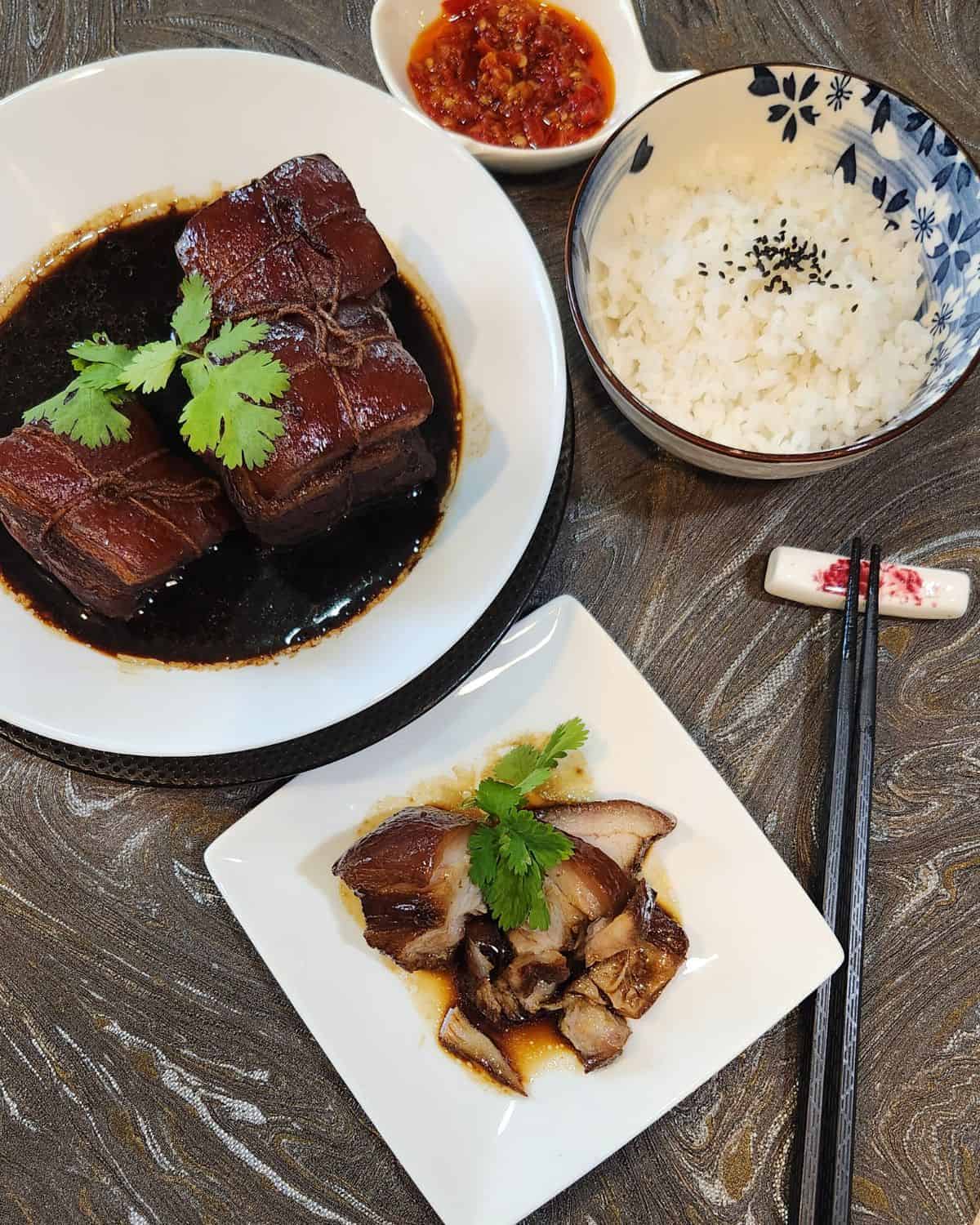
Dong Po Rou is best enjoyed with a simple bowl of steamed rice or soft, pillowy mantou buns. You can also try my pumpkin mantou or cheese mantou for a slightly richer twist—the savory braised sauce soaks beautifully into the bread.
To balance the richness of the pork belly, serve it with lighter side dishes like stir-fried green beans with eggs, bok choy stir fry, spicy Szechuan-style tofu, or a comforting bowl of egg drop soup. A quick pork and broccoli stir-fry also pairs well for a complete, satisfying meal.
For a refreshing finish, pair this dish with a light dessert like peach gum dessert or fruity options such as mango pudding or mango pomelo sago. These help cleanse the palate after the rich, savory flavors of this braised pork belly.
Dong Po Rou FAQs
Dong Po Rou is a specific style of red-braised pork named after the Song dynasty poet Su Dong Po. It is simmered in wine, soy sauce, and sugar for a longer time than Hong Shao Rou, resulting in deeper caramelization, a more gelatinous texture, and an intensely savory-sweet glaze.
You know it’s ready when the pork belly becomes tender enough to slide a chopstick through easily, and the sauce has thickened into a shiny glaze that clings to the meat.
Yes! Many home cooks successfully adapt traditional recipes for the slow cooker or Instant Pot—just adjust cooking time and liquid levels accordingly. The slow method can actually enhance tenderness and flavor concentration.
Opt for skin-on pork belly with even layers of fat and lean meat. Cubes around 5 cm (2 in) ensure the best balance of texture and flavor—and note that the pieces will shrink during braising, so cut generously.
Storage
Store leftover Dong Po Rou in an airtight container in the refrigerator for up to 3–4 days. The flavors deepen as it rests, making it even more delicious the next day.
Reheating – Reheat gently on the stovetop over low heat or in the microwave until warmed through. Add a splash of water if the sauce thickens too much.
Freezing – You can freeze braised pork belly for up to 1 month. Let it cool completely before transferring to a freezer-safe container. Thaw overnight in the fridge before reheating.
More Chinese Pork Recipes You’ll Love
If you enjoyed this Dong Po Rou, here are more delicious Chinese pork recipes you can try next. These dishes are packed with rich flavors and are perfect for everyday meals or special occasions.
- Chinese Braised Pork Shank – Tender, rich, and slow-braised until fall-off-the-bone.
- Crispy Pork Belly – Golden and crackly skin with juicy, flavorful meat.
- Easy Pork Jerky (Bak Kwa) – Sweet, smoky, and perfect as a snack or homemade gift.
You can find more braised, roasted, steamed, and stir-fried dishes in my Asian Pork Recipes collection.


Dong Po Rou
Equipment
- 1 claypot optional
Ingredients
- 1 kg pork belly
- 600 cc white cooking wine
- 2 tbsp shao xing wine
- 5 tbsp dark soy sauce
- 2 tbsp golden syrup or rock sugar
- 1000 cc Water
- 2 slices Ginger
- 1 stalk scallions
- 6 pcs garlic
- 1 star anise
- 2 pcs bay leaves
Instructions
- Cut the pork belly into squares (keep in mind they’ll shrink when cooked). Tie each piece with cotton string to keep it firm during braising. Place in a pot with enough cold water to cover, then add scallions, leeks, ginger slices, and bay leaves. Bring to a boil over medium heat and simmer for 10 minutes to remove impurities. Skim off any white foam.
- Remove the pork belly and pat it dry. In a dry skillet, sear each side to render excess fat. This step keeps the final dish less greasy. In a clean pot, lay scallions, ginger, garlic, star anise, and dried chilies (if using) at the bottom. Place the pork belly on top.
- Pour in white cooking wine, Shaoxing wine, dark soy sauce, golden syrup, and enough water to fully cover the pork. Cover with a lid and bring to a boil over medium heat.
- Once boiling, lower the heat. Simmer for 1 ½ hours, turning the pork occasionally. When the liquid has reduced and the pork is dark brown, uncover and cook for another 30 minutes to thicken the sauce. Strain the broth and discard the aromatics. Remove the ties and serve the pork belly with the sauce, warm rice, or steamed buns.
Video
Notes
- Authenticity – Use a claypot for a traditional touch, but a heavy-bottomed pot works just as well.
- Make your pork belly fragrant – Blanch the pork belly in boiling water for 10 minutes to remove impurities and odor.
- Less oily – Sear each side of the pork to render excess fat, keeping the final dish light and glossy.
- Note the size – Cut the pork belly slightly larger than you want it served, as it will shrink during cooking.
- Make ahead – The flavor only gets better after resting overnight, perfect for meal prep or hosting.
- Golden touch – Use homemade golden syrup for a richer, caramelized sauce.




I was challenged by my husband to make this ancient Chinese dish created by a famous poet in China. It turned out super delicious and everyone in the family loves it. The meat is so tender and the broth so tasty!