

Wingko Babat Recipe – Traditional Indonesian Coconut Cake
 This post may contain affiliate links.
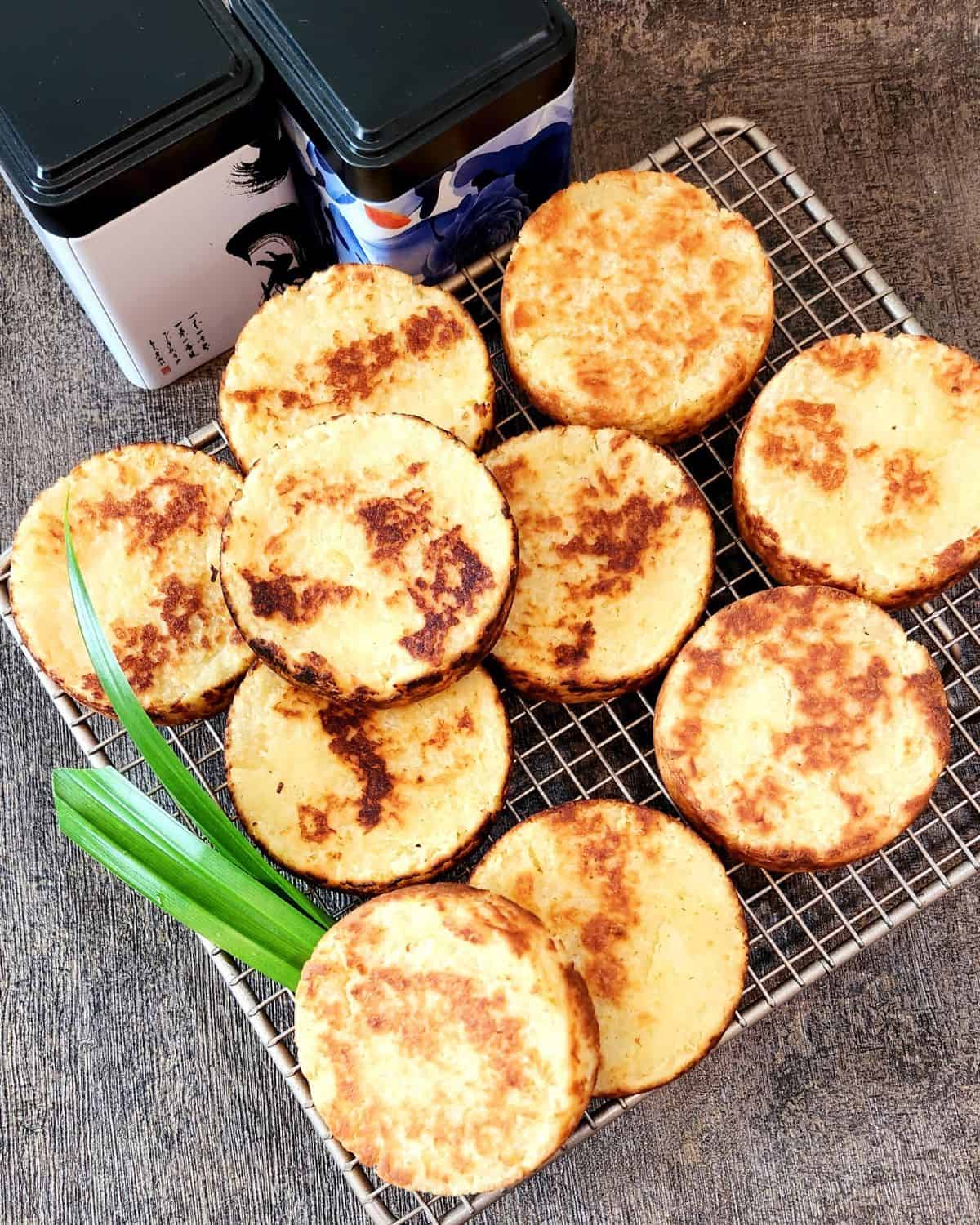
Wingko Babat is a traditional Indonesian coconut cake with a lightly crisp exterior and a soft, chewy center. Made with grated coconut and glutinous rice flour, this popular snack from Java is known for its rich coconut flavor and satisfying texture. It’s simple to make and perfect with a cup of tea or coffee.

A Quick Look at the Recipe
🏷️ Recipe Name: Wingko Babat
⏱️ Ready In: ~ 30 minutes
🍽️ Serves: 10 pieces
🔥 Calories: 282 kcal per serving (estimate)
🧾 Main Ingredients: Shredded coconut, pandan leaves, coconut milk, sugar, salt, glutinous flour, egg, vanilla extract, cheddar cheese.
🥗 Dietary Info: Gluten free
🧠 Difficulty: Very easy.
Have a question? Ask AI!
Wingko Babat is a traditional Indonesian coconut cake made with shredded coconut, coconut milk, and glutinous rice flour. Originating from Babat, East Java, this popular snack is known for its lightly crisp exterior, chewy center, and rich coconut flavor.
Traditional Wingko Babat can sometimes be quite dense and very sweet. My version includes egg and cheese for a softer texture and more balanced sweetness, making it easier to enjoy as an everyday snack.
If you love coconut-based treats, you might also enjoy Putri Mandi, Ongol-Ongol, or Kuih Kosui. Each one highlights coconut in a different way, but Wingko Babat stands out for its unique chewy texture and golden-brown crust.
What you’ll love about this recipe:
Recipe Ingredients

Ingredient Notes
Grated Coconut – Use freshly grated coconut whenever possible for the best flavor and texture. If using frozen grated coconut, thaw completely and squeeze out excess moisture before using. Avoid sweetened shredded coconut, as it will make the Wingko Babat too sweet and alter the texture.
Glutinous Rice Flour – Despite its name, glutinous rice flour contains no gluten. It gives Wingko Babat its signature chewy texture. Do not substitute regular rice flour, which produces a drier and less chewy result.
Coconut Milk – Full-fat coconut milk provides richer flavor and a softer texture. Shake or stir well before measuring if the cream has separated.
Pandan Leaves – Pandan adds a subtle floral aroma that complements the coconut beautifully. If unavailable, you can omit it, though the flavor will be less fragrant.
Grated Cheese – Not traditionally used in Wingko Babat, but it adds richness and helps balance the sweetness. It also contributes to the softer texture in this version.
Be sure to check out the full recipe and ingredient list below
How to Make Wingko Babat

STEP 1. Steam the freshly shredded coconut with 2 pandan leaves with high heat for 15-20 minutes (Image 1). Pour the coconut milk in a pot with pandan leaves (Image 2). Put in the sugar and salt (Image 3). Stir well until the sugar dissolves. Let it simmer (Image 4).

STEP 2. In a big bowl, pour in the coconut milk, steamed coconut, glutinous rice flour, and vanilla extract (Images 5, 6, 7, 8). Mix well using a spatula thoroughly.

STEP 3. Put in egg and grated cheese (Images 9, 10). Mix well and the batter is ready (Image 11). Brush some oil or butter on each holes of the dorayaki pan (Image 12). Preheat the pan on medium heat.

STEP 4. Pour 1-2 tablespoon of the dough into the hole, try to fill it to the brim (Image 13). Put on the lid (Image 14). Fry for about 6 minutes, or until the bottom is dry and firm enough to flip (Images 15, 16). Cooking time may vary depending on pan thickness—adjust heat as needed and check both sides. Watch closely to prevent burning.


STEP 5. Flip the cake until both sides are thoroughly cooked. You may brush some butter on each sides.
STEP 6. Take them off the pan and leave them on a cooling rack. Let them cool down completely. They are ready to eat.
Pro Tips
- Use freshly grated coconut if possible – Fresh coconut gives the best flavor and moisture. If using frozen grated coconut, thaw completely and squeeze out excess liquid before mixing.
- Let the batter cool slightly before adding the egg – Adding egg to a very hot mixture may partially cook it, resulting in an uneven texture.
- Grease the pan generously – Brush butter or oil over the pan and the sides of each mold to prevent sticking and create an attractive golden crust.
- Cook over medium-low heat – Wingko Babat cooks slowly because of the coconut and glutinous rice flour. High heat may brown the outside before the center is fully cooked.
- Flip only when the bottom is golden brown – Turning too early can cause the cakes to break apart. Wait until the surface looks set and the bottom develops a deep golden color.
- Adjust the browning to your preference – For a softer cake, remove it once both sides are lightly golden. For a crispier crust, cook a little longer on each side.
Serving Suggestions
Chewy Wingko Babat pairs well alongside Indonesia’s other exotic cakes:
- Lapis Legit (Spiced Layer Cake) – Buttery, aromatic layers balance Wingko’s rustic simplicity.
- Klepon or Ondeh-Ondeh (Pandan Coconut Balls) – Chewy rice cakes with coconut with bursts of liquid coconut sugar inside.
- Bika Ambon – A fragrant, springy cake with distinct honeycomb texture, infused with pandan or coconut milk. Its crispy edges and chewy center make every bite irresistible.
- Pandan Wajik – A fragrant sticky rice cake with a similar chewy texture and rich coconut flavor.
- Bika Ambon – A springy honeycomb cake with a unique texture and aromatic pandan notes.
Enjoy Wingko Babat with a cup of Lemongrass Tea, Butterfly Pea Flower Tea, Tamarind Iced Tea, or Red Ginger Drink for a comforting afternoon snack.
Wingko Babat FAQs
This snack is vegetarian-friendly. For a vegan version, simply omit the egg—the cake will still turn out delicious, though slightly firmer in texture.
Wingko Babat is different from the regular coconut cake found globally. This is a simple rich coconut cake with glutinous rice flour.
For best results, use fresh coconut—it gives a wonderfully moist texture. If substituting with desiccated coconut, lightly spray it with water and steam briefly to rehydrate before use.
Storage and Reheating
If there are some leftover, you can store them in an airtight container for up to 5 days. Make sure each piece is wrapped individually.
Reheating is very easy. You can heat it in a microwave or on a pan for a few minutes.
Looking for naturally gluten-free treats? Browse these Asian gluten-free desserts.

Wingko Babat – Indonesian Traditional Coconut Cake
Ingredients
- 330 gr shredded coconut
- 2 pcs pandan leaves
Coconut milk mixture
- 150 gr coconut milk
- 2 gr salt
- 1 pcs pandan leaf
- 100 gr sugar
Other ingredients
- 150 gr glutinous flour
- 1 egg
- 1 tsp vanilla extract optional
- 100 gr cheddar cheese grated
Instructions
- Steam freshely shredded coconut with 2 pandan leaves for 15 minutes. (high heat)
- Pour coconut milk and 1 pandan leaf into a pot and cook until simmer.
- Pour in sugar and salt. Stir while it is still hot and let the sugar dissolve thoroughly.
- Put the steamed shredded coconut in a big bowl. Put in egg, glutinous flour, vanilla extract and coconut mixture. Mix well thoroughly.
- Preheat the pancake pan, brush some oil or butter.
- Spoon the dough into the each hole, filling the hole to the brim.
- Cover with the lid. Let them cook for 10 minutes or until you can see the bottom is no longer wet and you can turn it upside down.
- Fry the cake until both sides are golden brown. You can brush both sides with butter or salted butter.
- Once they are done, let them cool completely on a cooling rack. Pack each one of them with a plastic bag. Enjoy!




If you are a coconut lover, you definitely have to try this! Its salty and sweet combination in a soft texture with crispy edge will make you fall in love!