

Wife Cake (Lao Po Bing) Recipe – Flaky Chinese Pastry You Can Make at Home
 This post may contain affiliate links.
Wife Cake (Lao Po Bing), also known as Sweetheart Cake (老婆餅), is a classic Chinese pastry with a flaky, buttery crust and a soft, chewy filling that melts in your mouth. Lightly crisp on the outside and delicately sweet inside, it’s a beloved Hong Kong bakery treat often enjoyed with tea or given as a thoughtful gift.

A Quick Look at the Recipe
🏷️ Recipe Name: Wife Cake (Lao Po Bing)
⏱️ Ready In: ~ 35 minutes
🍽️ Serves: 10 pieces
🔥 Calories: 152 kcal (per serving)
🧾 Main Ingredients: Cake flour, butter, sugar, glutinous rice flour, sesame seeds, dessicated coconut.
🥗 Dietary Info: Halal
🧠 Difficulty: Easy, very simple steps.
Have a question? Ask AI!
I first fell in love with Wife Cake (Lao Po Bing, also known as Sweetheart Cake) while I was living in Taiwan. At first glance, it looks like a simple Chinese pastry, but bite into that thin, flaky crust and you’ll discover a sweet, chewy filling that’s quietly irresistible.
Traditionally, wife cake is filled with winter melon paste, but in this version, I recreate that same soft, chewy, melt-in-your-mouth texture using simple ingredients you can easily find at home, without losing its signature character.
There’s also a beautiful story behind this classic pastry. Legend says a devoted wife made and sold these cakes to support her family while her husband was ill. Her love and sacrifice gave the pastry its name, turning it into a meaningful symbol of care and devotion.
Like salted egg yolk pastry, snow skin mooncake, traditional Hong Kong mooncake, or Taiwanese pineapple cake, wife cake is part of a long tradition of Asian pastries that transform humble ingredients into something truly special. And once you try it fresh with a cup of tea, you’ll understand why I couldn’t resist bringing a box home every time I passed a bakery.
If you enjoy Asian bakery classics, you may also love Japanese salt bread (shio pan), known for its crispy buttery base and soft, airy crumb.
Why You Will Love This Recipe
Recipe Ingredients
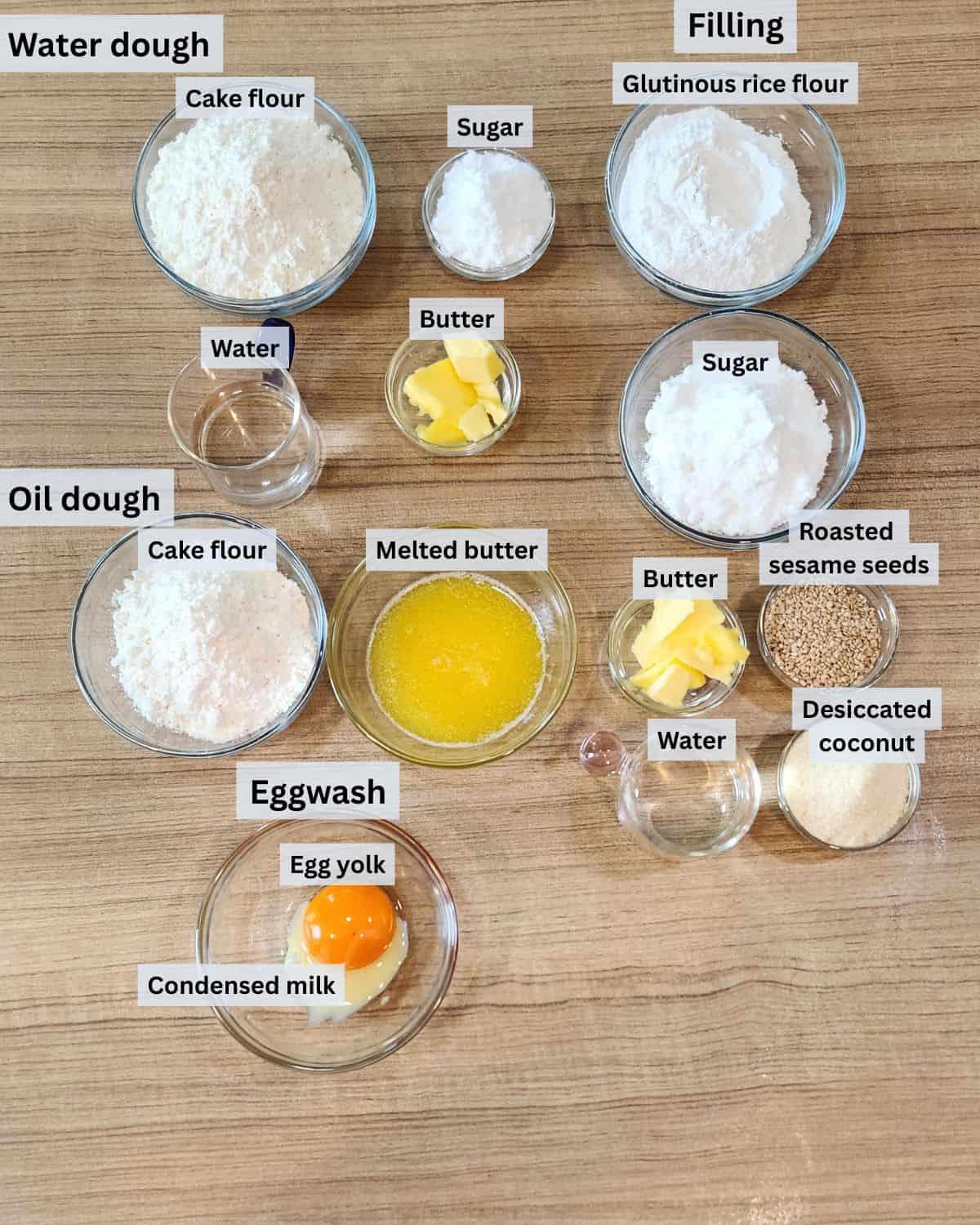
Ingredient Notes
Roasted sesame seeds – Toast white sesame seeds in a pan or oven until lightly golden and fragrant. This enhances their nutty aroma and gives the wife cake its signature topping. Reserve some untoasted seeds for decoration if you like a lighter contrast.
Condensed milk – Adds sweetness and helps create that soft, chewy filling. You can use condensed milk or try my homemade condensed milk for a richer flavor. If you prefer a less sweet finish, you can brush the pastry with evaporated milk or a simple egg wash instead.
Be sure to check out the full recipe and ingredient list below
Substitutions & Variations
You can easily customize this wife cake recipe depending on what you have on hand or the flavor you prefer.
Flour options – You can use bread flour instead of cake flour for a slightly chewier and more structured pastry. Cake flour gives a lighter, more delicate texture, while all-purpose flour works as a good middle ground.
Filling variations – Traditional wife cake is often made with winter melon filling, but there are many delicious alternatives you can try.
- Ube halaya for a rich, creamy twist
- Red bean paste for a classic Asian bakery flavor
- White lotus paste for a smoother, more traditional filling
- Mung bean paste for a lighter, subtly sweet option
Sweetness level – If you prefer a less sweet pastry, you can slightly reduce the sugar in the filling or balance it with a pinch of salt for a more rounded flavor.
Texture tweak – For a softer filling, add a little more liquid when cooking the filling. For a firmer, chewier bite, cook it slightly longer until it thickens more.
How to Make Wife Cake
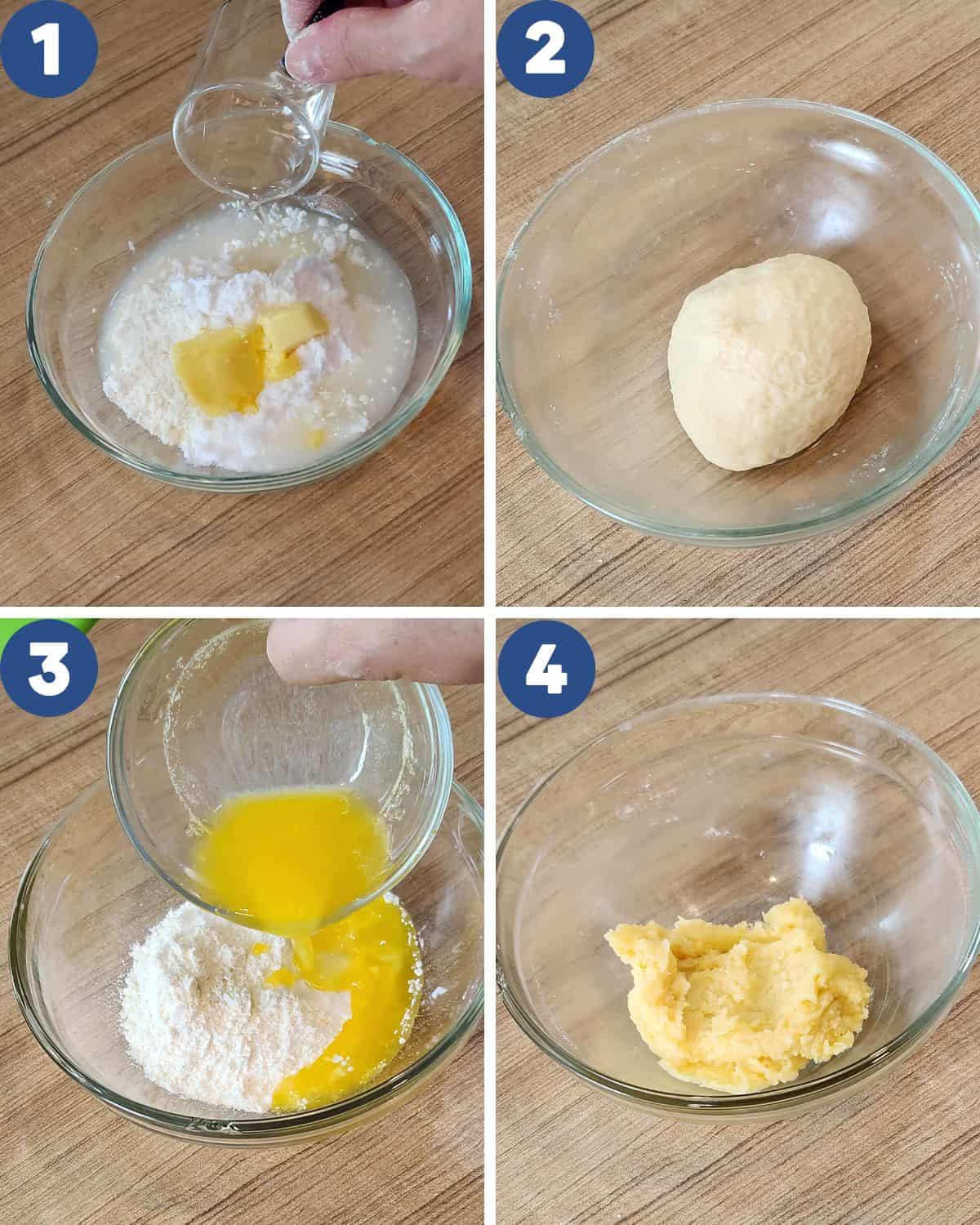
STEP 1 – Make the doughs
Water dough: In a bowl, mix flour, sugar, butter, and water until combined, then knead until smooth and elastic (Images 1, 2). Cover with cling wrap and rest 20 minutes.
Oil dough: In a separate bowl, mix flour with melted butter until it forms a soft paste (Images 3, 4). Cover and rest 20 minutes.

STEP 2 – Cook the filling
In a non-stick pan, combine water, sugar, and butter; heat until the butter melts. Stir in glutinous rice flour (Image 5), then add roasted sesame seeds and desiccated coconut (Image 6). Cook, stirring, until cohesive and slightly sticky, once it turns chewy and pulls from the pan, remove from heat (Image 7). Cool, then divide into 10 equal portions (Image 8).

STEP 3 – Portion & wrap the doughs
Divide both the water dough and oil dough into 10 equal pieces; keep covered to prevent drying (Image 9). Rest 10 minutes. Flatten one water-dough piece, place one oil-dough piece in the center, wrap, and pinch to seal (Images 10, 11). Repeat with the rest and rest again 10 minutes (Image 12).
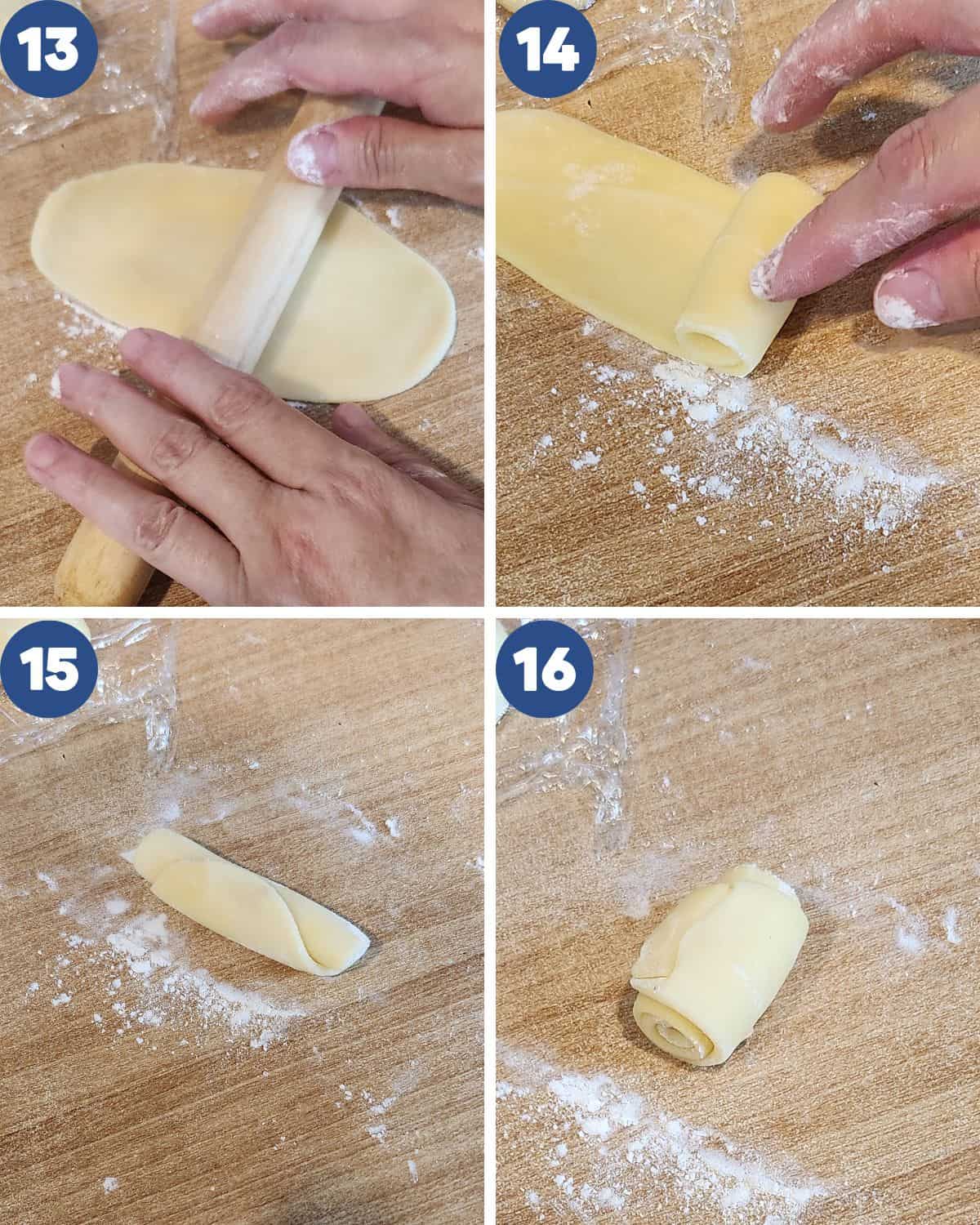
STEP 4 – Roll & fold
Working one piece at a time, roll into an oval (Image 13). Roll up from the short end to form a log, rotate 90°, roll out again, and roll up once more (Images 14–16). Repeat with all pieces.

STEP 5 – Shape & fill
Take one log and press both ends toward the center with your thumbs (Image 17). Roll into a round (Image 18). Flip, add one portion of filling to the center, and seal tightly (Images 19, 20).

STEP 6 – Egg wash
Lightly flatten each piece to a palm-size disc (Images 21, 22). Place on a lined baking tray. Mix egg yolk with condensed milk, strain for smoothness, and brush a thin coat on top; let it set slightly, then brush a second thin coat (Image 24).

STEP 7 – Score, top & bake
Score the tops lightly (Image 25), sprinkle with white sesame seeds (Image 26), and bake in a preheated oven at 374°F (190°C) for 15–20 minutes, until golden (Image 27). Cool completely on a rack (Image 28), wrap individually, and enjoy!
Pro Tips
- Scale it out: Weigh everything, doughs and filling, so all 10 cakes bake evenly and brown at the same time.
- Rest = flakes: Don’t skip the 20-minute rests. They relax gluten so the pastry rolls thin without springing back (hello, flaky layers).
- Dust some flour: Keep your pin lightly floured so layers don’t tear.
- Gentle hands: When flattening the final disc, press lightly, so the filling stays centered and the layers don’t smear.
- Thumb press trick: After standing the log upright (Step 5), pressing both ends toward the center helps create an even, round wrapper with a thicker rim for sealing.
- Strain egg wash for smooth coat: Strain the egg yolk + condensed milk and brush two light coats.
- Make-ahead win: Filling can be made a day ahead; chilled portions are easier to wrap and shape.
- Storage smarts: Once cool, wrap individually. Room temp 1–2 days in an airtight container; for longer, refrigerate and re-crisp briefly in a 300°F (150°C) oven.
Serving Suggestions
Wife cake is best enjoyed at room temperature, when the pastry is crisp and the filling has that perfect chewy bite. It pairs beautifully with tea, making it a comforting treat for any time of day.
For a classic pairing, enjoy it with creamy oolong milk tea, fragrant rose milk tea, or bold Assam milk tea. The richness of these drinks complements the flaky pastry perfectly.
Prefer something lighter? Try it with butterfly pea flower tea, lemongrass tea, or a refreshing lemon ginger drink to balance the sweetness.
If you enjoy pairing pastries with tea, you can explore more Asian dessert recipes and Asian food recipes for inspiration.
FAQs about Wife Cake
Wife cake is made with a flaky pastry created from two types of dough: water dough and oil dough wrapped around a sweet, chewy filling. The filling is traditionally made with winter melon, sugar, and glutinous rice flour, though modern versions often use alternative fillings.
According to legend, the name comes from a story about a devoted wife who made and sold these pastries to help support her sick husband. Her dedication gave the pastry its name, turning it into a symbol of love and devotion.
It has a light, crisp, buttery pastry with a mildly sweet filling. The filling gives a subtle flavor and chewy texture, while sesame seeds or coconut add a gentle nuttiness.
It’s popular year-round in Hong Kong and Taiwan but is especially enjoyed during festivals or as a tea-time snack.
Yes! Wife Cake, Lao Po Bing (老婆餅), and Sweetheart Cake all refer to the same traditional Chinese pastry. Different names are used in English or Cantonese, but the pastry is the same.
Some English translations call it “Marriage Pie” or “Sweetheart Cake” to emphasize the romantic legend behind its name.
Yes! While traditional wife cake uses winter melon filling, you can easily make a delicious version without it. In this recipe, the filling is made with simple ingredients that still create that signature chewy, slightly sticky texture. You can also try alternatives like red bean paste, mung bean paste, or even ube halaya for a different flavor.
Store wife cake in an airtight container at room temperature for up to 2 days, or refrigerate for up to 4–5 days. To enjoy it again, warm it slightly in the oven to bring back the crisp pastry and chewy filling.
Yes, wife cake can be frozen after baking. Let them cool completely, then store in an airtight container or freezer bag for up to 1 month. Reheat in the oven until warmed through and crisp again before serving.

Storage
Once the wife cakes have cooled completely, wrap each one individually to help keep the pastry crisp.
Room temperature – Store in an airtight container for up to 2 days. This keeps the pastry light and flaky while the filling stays soft and chewy.
Refrigerator – For longer storage, keep them in the fridge for up to 1 week. Reheat in a 300°F (150°C) oven for 5–8 minutes to bring back the crisp layers.
Freezer – Wife cake freezes well for up to 1 month. Let them cool completely, then store in an airtight container or freezer bag.
To serve, thaw at room temperature and warm briefly in the oven to restore the flaky texture.


Wife Cake – Lao Po Bing
Equipment
- 1 Rolling Pin
Ingredients
Water Dough
- 100 gr cake flour
- 15 gr butter
- 20 gr sugar
- 40 ml water
Oil Dough
- 60 gr cake flour
- 38 gr butter melted
Filling
- 60 gr glutinous rice flour
- 15 gr sesame seeds roasted
- 100 gr water
- 50 gr sugar
- 20 gr butter
- 10 gr desiccated coconut
Instructions
- Water dough: In a bowl, mix flour, sugar, butter, and water until combined, then knead until smooth and elastic. Cover with cling wrap and rest 20 minutes.Oil dough: In a separate bowl, mix flour with melted butter until it forms a soft paste. Cover and rest 20 minutes.
- In a non-stick pan, combine water, sugar, and butter; heat until the butter melts. Stir in glutinous rice flour, then add roasted sesame seeds and desiccated coconut. Cook, stirring, until cohesive and slightly sticky, once it turns chewy and pulls from the pan, remove from heat. Cool, then divide into 10 equal portions.
- Divide both the water dough and oil dough into 10 equal pieces; keep covered to prevent drying. Rest 10 minutes. Flatten one water-dough piece, place one oil-dough piece in the center, wrap, and pinch to seal. Repeat with the rest and rest again 10 minutes.
- Working one piece at a time, roll into an oval. Roll up from the short end to form a log, rotate 90°, roll out again, and roll up once more. Repeat with all pieces.
- Take one log and press both ends toward the center with your thumbs. Roll into a round. Flip, add one portion of filling to the center, and seal tightly.
- Lightly flatten each piece to a palm-size disc. Place on a lined baking tray. Mix egg yolk with condensed milk, strain for smoothness, and brush a thin coat on top; let it set slightly, then brush a second thin coat.
- Score the tops lightly, sprinkle with white sesame seeds, and bake in a preheated oven at 374°F (190°C) for 15–20 minutes, until golden. Cool completely on a rack, wrap individually, and enjoy!
Notes
- Scale it out: Weigh everything, doughs and filling, so all 10 cakes bake evenly and brown at the same time.
- Rest = flakes: Don’t skip the 20-minute rests. They relax gluten so the pastry rolls thin without springing back (hello, flaky layers).
- Dust some flour: Keep your pin lightly floured so layers don’t tear.
- Gentle hands: When flattening the final disc, press lightly, so the filling stays centered and the layers don’t smear.
- Thumb press trick: After standing the log upright (Step 5), pressing both ends toward the center helps create an even, round wrapper with a thicker rim for sealing.
- Strain egg wash for smooth coat: Strain the egg yolk + condensed milk and brush two light coats.
- Make-ahead win: Filling can be made a day ahead; chilled portions are easier to wrap and shape.
- Storage smarts: Once cool, wrap individually. Room temp 1–2 days in an airtight container; for longer, refrigerate and re-crisp briefly in a 300°F (150°C) oven.



I love the texture of this wife cake. Flaky and chewy in one bite. You will fall in love at first bite, definitely!